Tuesday, July 16, 2013

Former Browns Player, Matt Batts, who caught Satchel Paige, passes away at age 91


Former Major League catcher Matthew Daniel "Matt" Batts died at his home in Baton Rouge Sunday at the age of 91.

In 1951, he was among the first catchers teamed up with Satchell Paige when Paige became the first black pitcher in the American League.  He was also catcher for Detroit pitcher Virgil Trucks when Trucks became only the third Major League pitcher to throw a second no-hitter in a season.

Born in San Antonio and a standout player for Baylor, 20-year-old Batts accepted tuition money from the Boston Red Sox for signing in 1942.  As a result, he was kicked off the team and joined the Army Air Corps for the duration of World War II.  Batts would later be inducted into the Baylor Hall of Fame.

In a fluke position change on San Antonio's semipro team, Batts found his niche behind the plate.  Hired as backup catcher in Boston, Batts wowed Sox fans at his debut in 1947 by cracking a home run in his first Major League at bat.  He batted .500 in his first sixteen appearances at the plate.

"When you woke in the morning," he recalled to New York sportswriter Peter Golenbock, "you wanted to get to the ballpark because you enjoyed it… loved the people, loved manager Joe McCarthy, coaches and the great ballplayers."

After four seasons, Boston traded Batts to the St. Louis Browns in 1951 where he hit .302 and caught for Satchell Paige.  He was there when, as a publicity stunt, 3-foot-7-inch tall pinch-hitter Eddie Gaedel made his only at-bat wearing Browns' jersey number "1/8."  The following year, St. Louis traded Batts to the Detroit Tigers where he started 116 games as catcher.

On August 25, 1952, Batts caught for Virgil Trucks when Trucks threw his second record-setting no-hitter.  In 1954, Detroit traded Batts to Chicago, then to Baltimore later that year.  Finally, the Cleveland Indians and Cincinnati Reds purchased Batts' contracts.  His last appearance on the diamond was May 8, 1956, catching for Cincinnati.  In 546 games of which he started 409, Batts racked up 26 home runs, 219 runs batted in, a batting average of .269 and a fielding percentage of .985.

Batts retired to Baton Rouge, Louisiana, where fans asked him to coach baseball clinics.  He and wife Arleene started Batts Printing, donating programs and tickets for games.

Former 5-time CWS Championship Baseball Coach and LSU Athletic Director Skip Bertman recalls, "Matt Batts really was an unsung hero who was legendary for helping kids play better ball.  Long after he left the big leagues, he always gave of himself as an instructor, and he and Arleene donated printing to help the clinics and LSU baseball.  He will be missed."

James Carville adds, "Matt Batts had arguably one of the greatest names in the history of baseball.  All of his contributions to baseball serve only to compliment his later contributions to Baton Rouge. The city lost one of its great citizens and treasures in Matt."

Monday, July 15, 2013

First No-Hitter in National League History

Just a reminder that today, July 15, marks the 137th anniversary of the first no-hitter in National League history, hurled by George Washington Bradley of our beloved St. Louis Brown Stockings over the visiting Hartford Blue Legs, 2-0, at Sportsman's Park on North Grand, July 15, 1876. Old GWB was quite the workhorse that season, having the same won-lost record as the third-place Browns, 45-19. He pitched 573 (yes, 573) of the 577 innings the Browns played that season. Pitchers were restricted to delivering the ball submarine style and couldn't bring their hands above the belt until after they'd released the pitch.

The newspapers of the day treated the no-hitter as a team effort, since it truly was. The ball was in play a lot. And, the local papers downplayed the no-hit aspect of the game because, I believe, they were a little sore that Bradley had already signed a contract for 1877 to play for the Philadelphia Athletics. Signing during the season to play with another team the following season was allowed. Philadelphia was closer to Bradley's home in Reading, Penn.

The Saturday, July 15, game started at 4 p.m. local time and ended at 5:58 p.m. (no time zones for another decade, until the railroad magnates demanded Congress set up such zones to help railroad scheduling; all time was local observatory time, which meant that when it was 4 p.m. in St. Louis it was about 3:50 p.m. in Kansas City and 4:10 p.m. in Chicago). Daylight savings time hadn't been invented yet, so that would translate to 5 to 6:58 p.m. Central Daylight Time today. So, sometime today, between 5 and 6:58 p.m. hoist a cold one to the memory of George Washington Bradley, a great pitcher of the early days of baseball, who was still working as a ballpark guard in Philadelphia during the Cardinals-A's World Series of 1930.

Thursday, July 11, 2013

Browns Pitcher Puts out Fire


St. Louis Post-Dispatch
RUBE WADDELL THE STAR IN A PITCHER’S BATTLE; OPPOSED BY HOTEL FIRE

Well Supported by His Teammates
He Shuts It Out Before Alarm Strikes

Special to the Post-Dispatch

WASHINGTON, July 11 [1908]—Rube Waddell figured in another bit of heroism this evening, just after the Browns had returned from the ball grounds where they were beaten by the Senators.

The boys were dressing on the fifth floor of the Arlington Hotel, when they heard the cry of “fire” from the street below.


Waddell rushed to the window. Smoke was pouring out. The awnings on the windows just below his room were in flames. For an instant he disappeared. A crowd was already gathered in the street below, but no one had turned in a fire status.


Then Rube appeared at the window. In each hand he carried a big pitcher of water. Leaning out of the window, and, avoiding as best he could the smoke from the fire, he poured the contents of the two pitchers on the flames.

The other boys brought more water, and in five minutes Rube had put out the fire and was cheered by the crowd below, nearly everyone of whom recognized the great pitcher of the Browns team.


The attendants did not know of the fire until it had been put out. It probably started when someone threw a lighted match out of the window above.

Tuesday, June 18, 2013

Visit With Dolph Orthwein

St. Louis Browns Historical Society board members and staff met recently with Mr. Adolphus B. "Dolph"  Orthwein. Mr. Orthwein is soon to be 96 years old and is the nephew of Ralph H. and Max R. Orthwein, part of the original 1902 ownership group of the Browns. (Ralph was the team's first President) .

A Florida resident, Mr. Orthwein splits his summers and Fall between St. Louis and Cooperstown, New York (where he owns a dairy farm). He comes from a sporting family. In addition to his two uncles, his brother was instrumental in bringing the Los Angeles Rams to St. Louis and was owner of the New England Patriots. His son Stephen A. is a member of the Polo Hall Of Fame.

Among the stories Dolph told the BFC delegation was about regularly jamming on harmonica with his good friend and near neighbor, Stan Musial.

Max Orthwein died in 1933 and Ralph Orthwein died in 1937, when Mr. Dolph Orthwein was in his teens.

l~r  (standing)  Bill Rogers, Mike Haueisen (summer intern from Mizzou Journalism School), Emmett McAuliffe, Bill Borst,
(seated) "Dolph" Orthwein
Click on Photo to Enlarge

Tuesday, June 11, 2013

Stellar class headed to St. Louis Sports Hall of Fame

By Dan O’Neill doneill@post-dispatch.com

Hard to believe it, but the St. Louis Sports Hall of Fame is getting ready to celebrate its fifth year. Actually, “celebrate” is a soft term for the occasion. The Hall is exploding in its fifth year.

Ready to unveil its artist rendering of a projected new building in downtown, the Hall will embellish the excitement by inducting a spectacular 15-member Class of 2013 and seven Special Achievement awards on Nov. 20 at the Millennium Hotel.

“This year is as special as the very first year because we have a beautiful state-of-the-art building coming to put St. Louis in first place with the best Hall of Fame in America,” SLSHOF president Greg Marecek said.

The list of inductees would serve well for an inaugural class, highlighted by some of the most memorable figures in St. Louis sports history, and representing numerous walks of sports life.

Those to be honored include Blues stars Brett Hull and Red Berenson, Cardinals Keith Hernandez and Orlando Cepeda, Missouri and St. Louis Cardinals football standout Mel Gray, Webster High track star and “world’s fastest man” Ivory Crockett, St. Louis Univeristy soccer legend Carl Gentile and McKinley High and Boston Celtics great Jo Jo White.

In addition, women’s golf star Judy Rankin and women’s national racquetball champion Rita Hoff Scott will enter the Hall, along with Cardinals owner Bill DeWitt Jr., broadcaster Jay Randolph, Post-Dispatch sportswriter Rick Hummel and Rams standout D’Marco Farr.

In addition, CBC boys soccer coach Terry Michler and Trinity Catholic soccer coach Vince Drake will receive special achievement awards.

The Hall requires nominated athletes to attend the ceremonies to be inducted. Several athletes who have been nominated in years past but have been unable to attend, including Kurt Warner, Willie McGee, Joe Torre and Tim McCarver, still could be added to the roster.

But that’s not all. Before the annual induction ceremony, the Hall will wet the whistle of local sports fans by conducting its “Heroes and Legends Series” on Aug. 23 at Missouri Athletic Club.

The 2013 edition will recognize three distinguished managers in Major League Baseball history as “Legends of the Dugout.” The terrific trio includes Cardinals Hall of Famer Whitey Herzog, Los Angeles Dodgers HOF manager Tom Lasorda and Atlanta Braves great Bobby Cox.

The highlight of the ceremonies will be a town hall session in which the three relate tales and anecdotes from their accomplished careers. The threesome combined for four World Series titles, nine National League pennants and 29 division championships.

There will be a few autographed items commemorating the special day that will be auctioned.

Before his death in March, Hall of Famer and St. Louis native Earl Weaver was to participate in the event. With his family in attendance, Weaver will be honored posthumously with his Hall induction.

Individual tickets for the “Heroes and Legends Series” are $100, while tables of 10 can be purchased for $1,000.

Tickets for both the induction ceremonies and the “Heroes and Legends Series” can be purchased at www.stlshof.com, by calling Tim Moore at 1-888-627-3235, ext. 710, or by mailing a check to St. Louis Sports Hall of Fame, P.O. Box 190833, St. Louis, Mo. 63119.

Two Weird Ones, with the White Sox

As printed in today's St. Louis Post-Dispatch "On This Date" column (page B4), the Browns were involved in two weird records on this date in baseball history. Both involved the Chicago White Sox, but separated by two decades.

On April 27, 1909, the Browns set a record for frustration by losing their third consecutive 1-0 game, all to the same team, the White Sox, at South Side Grounds. The losses were suffered April 25 by Bill Grahame, April 26 by four-time 20-game winner Jack Powell, and April 27 by future Hall of Famer, Rube Waddell. On April 27, 1930, White Sox first baseman Bud Clancy had no chances against the Browns in a nine-inning game. A team has to get 27 outs somehow. So, no chances for the first baseman means a lot of strikeouts and pop flies to the outfield (what broadcaster Mike Shannon terms cans of corn"). Not for nothing is the St. Louis Browns Historical Society's journal called Pop Flies. It is not often in baseball that the first-baseman comes off like "the Maytag repairman."


Tempting it certainly is to read a Whole Lotta Significance (to paraphrase Led Zeppelin) into the April 27, 1909 record. 1909 was a pivotal year and this setback may itself have been the pivitoal event in this pivotal year. But first a brief review of Browns history.

The Browns started their run in St. Louis in 1902 well enough. They almost took the pennant in their inaugural campaign, braced as they were by a number of "jumpers" from the National League, including two who would become Hall-of-Famers.* But the rest of the decade was spotty.


Nonetheless, owner Robert Lee Hedges stuck with the cast and crew that was "present and on roll" in 1902 ... including manager Jimmy McAleer. By 1908, McAleer's bunch had apparently righted the ship: the Browns had a .546 winning percentage, their best record since '02, giving Hedges fits in how to accommodate the crowds showing up at his door.** In the off-season, with the wind in his sails from '08, Hedges embarked on a complete rebuild of Sportsman's Park, expanding seating and fortifying it with the then-novel materials of concrete and steel.***

On April 24, the Browns completed a two-games-to-one series victory against Cleveland at League Park to climb to .500. But after the three straight 1-0 heartbreaking losses, the Browns would never climb above .500 again for '09. In fact, it would not be until 1916, after the federal court pulled the plug on the Federal League and the Browns took over the roster of the St. Louis Terriers, that the Browns would finish over .500 for a season.

After the '09 season, Hedges finally pulled the plug on inaugural manager Jimmy McAleer, whose eight-year run is topped only by St. Louisan Earl Weaver in Browns/Orioles franchise history.

The thing you can say about any 1-0 loss is its demoralizing for a team. The losers during this three game series were in order, Grahame, Powell and Waddell.


Bill Grahame was no standout. The next year, Grahame would have an 0-8 record in nine games pitched and would be sent back to the minors never to return. But with aces Powell, a former 20-game winner, and Waddell, a future Hall of Famer going to the hill and pitching that well, you expect to win.

Did losing those three games demoralize the Browns for the rest of the season? We cannot interview any of the participants so we will have to only speculate.


* Had jumping not been banned by the National Agreement, query whether Curt Flood's challenge of the reserve clause would have even been necessary.

**Sporting News, April 30, 1908 page 4, column 4

*** Technically the first concrete and steel stadium, though Philadelphia's Shibe Park

Saturday, June 1, 2013

Musial Takes the Mound

Musial's only big league pitching appearance took place on September 28, 1952. Safely in first place in the batting race, he was called in to pitch for a single batter in the first inning.

The opposing batter was Frank Baumholtz of the Chicago Cubs the runner-up in the batting race, who batted from the right side of the plate. Starter Harvey Haddix moved to right field and Hal Rice covered center while Musial pitched. After Baumholtz reached base, Haddix returned to the mound, Rice to left, and Musial to center for the remainder of the game.

Later in life, Baumholtz recalled that the play was a hot smash to third that should have been counted as a hit. Nonetheless, Musial captured his sixth NL batting crown with a .336 average.

Wednesday, May 22, 2013

Texas Fan Talks Browns Baseball

St. Louis Browns Fan Club member, Dick Ensweiler, chats with Club President, Bill Rogers, at a break in the action during a recent conference in Hot Springs, Arkansas. Ensweiler is CEO/President of the Texas Credit Union League and an avid collector of baseball memorabilia.
Dick Ensweiler (l) visiting with Browns Fan Club President Bill Rogers (r)

Click on Photo to Enlarge

Sunday, May 19, 2013

WADDELL PAYS FOR SELF IN ONE CONTEST


20,000 Philadelphia Fans Cheer Rube As He Beats His Old Team Mates
BY JAMES CRUSINBERRY

PHILADELPHIA – All hats off to Rube Waddell today. He turned a trick on dear old Philadelphia that no other ball player in the world could do. He beat the home team and was cheered by 20,000 of the most loyal fans in the world.

Click on Photo to Enlarge
It was the first time in history that Philadelphia has rooted for the visiting team - the St. Louis Browns

The remarkable part of the performance was that every man, woman and child in that immense throng was for Rube Waddell. They were willing to sacrifice victory for their team in a championship game just to see their pitcher of former years win the contract. It was Rube’s day from start to finish.

All loyalty to the Athletics was tossed to the wind when Rube Waddell, now with the Browns, was doing the pitching. The great crowd yelled with delight as Rube cut the ball over the played and fanned out the idolized hitters of the home team and the crowd cheered further when the Browns opened up a batting rally in the seventh inning.

20,000 Paid to See Rube

Rube paid for himself in one game. All by himself he drew a crowd of 20,000 persons when it is doubtful 4,000 would have attended under ordinary conditions. At least two factories closed their doors at 3:30 o’clock in the afternoon to allow the workmen to attend the game. Business down town was almost suspended. It was not to see the Browns and Athletics play ball that the people thronged the grounds. It was to see Rube pitch once more.
 

The game drew more than 20,000 fans, a remarkable total for the time. Without Rube, the Athletics experienced a 27 percent decrease in home attendance from 1907 to 1908 while the Browns enjoyed 48 percent increase in home attendance.

Monday, May 13, 2013

Don Larsen Expected at Browns Luncheon 9/26/13


Mark your calendar for September 26 for the 2013 St. Louis Browns player and fan club member reunion. The official reservation notice will be sent out soon. 

Frito-Lay Gives Cracker Jack A Makeover With New Line

Take me out to the ball game.

PepsiCo's Frito-Lay is attempting to reinvent Cracker Jack, hoping that a new name and more intense flavors will attract a younger audience to the 105-year-old snack.

A new product line called Cracker Jack'd, which began to get some buzz last November, launched Tuesday in convenience stores nationwide. The company is targeting younger customers, claiming they weren't connecting with the old-timey caramel corn and peanut product.

"The product as it stands ... isn't relevant to them," said Dave Skena, vice president of marketing for Frito-Lay. "Younger folks want more intense flavors and a wider variety of textures."

Cracker Jack'd will come in three different varieties: The Hearty Mix flavors have "clusters mixed with nuts," with flavors like PB & Chocolate and Berry Yogurt, while the Intense Mix flavors, like Buffalo Ranch and Spicy Pizzeria, have "intense flavor and pack a powerful crunch." Sweet 'n Savory Clusters includes a salted caramel flavor with "sweet and salty popcorn."

Read even more and see video at: http://www.huffingtonpost.com/2013/04/30/cracker-jackd_n_3185811.html#slide=2152515

Assessing Baseballs New Cell Phone Plan

Welcome to One Man Focus Group, where obsessive critic Paul Lukas evaluates tomorrow's cultural detritus today. 
 
The call to the bullpen is one of baseball's time-honored rituals, right up there with spitting tobacco juice and arguing with the ump. And for the past 80 years or so, that call has always been made on a traditional, hard-wired land line.

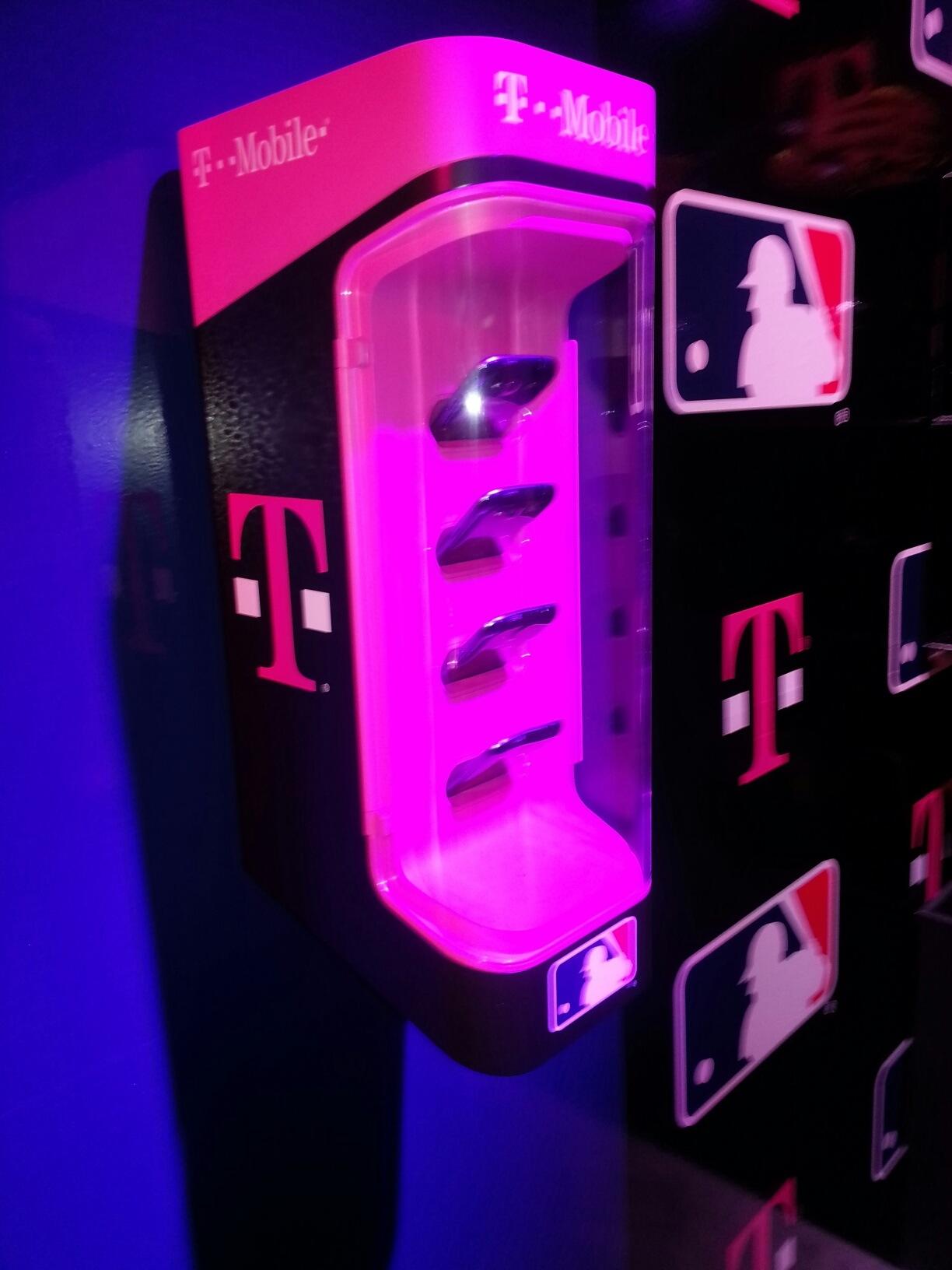
It's not clear when the first phone was installed in a baseball dugout, but baseball historian Peter Morris says direct lines from the dugout to the bullpen have been in use at least since 1930. But with the rest of the world moving to cellphones, Major League Baseball has decided to get with the program. In a classic example of "It wasn't broken, but we fixed it anyway," MLB has struck a deal with T-Mobile that will result in each team's dugout being outfitted with a kiosk containing four Samsung Galaxy S III phones, which managers and coaches will be able to use to call the bullpen.

The whole arrangement is supposedly very high-tech and secure, but you already know what's going to happen. For example:
 
  • A manager will grab the cellphone and be unable to get a signal.
  • A call will be dropped just as the manager is telling the bullpen coach who should start warming up.
  • Some 13-year-old kid will figure out how to hack the system and will then call the bullpen every single inning with the instructions, "Tell Cy Young to start loosening up."
  • The players will use the phones to watch internet porn in the dugout.

Such practical considerations notwithstanding, there's also something unseemly about a crusty old skipper or pitching coach using a cellphone. Does anyone really want to see Tigers manager Jim Leyland fumbling around with the latest high-tech phone designed for kids a quarter of his age? It'll be like watching your grandfather trying to navigate a video game while he gets a tattoo—undignified at best, cringe-inducing at worst.

Maybe they can get Leyland and the other older managers one of those Jitterbug phones marketed to the senior set. Otherwise, expect to see a lot of managers waving toward the batboy and saying, "Hey, how do I work this cockamamie thing again?"

Stephen Cole: Super Ned Garver Fan

 
Click on Photo to enlarge

Friday, May 10, 2013

St. Louis Sports Hall of Fame To Build $20 Million at Union Station

 According to WhoLou sources the St. Louis Sports Hall of Fame intends to build a 33,000 sq. ft. facility in the city. The ownership group which includes founder and president of the St. Louis Sports Hall of Fame Greg Marecek has hired local planning, architecture, and interiors firm JEMA as manager for the $20 million project. Marecek is also owner of three sports radio stations in St. Louis including 590 AM KFNS.

JEMA partner John Mueller confirmed WhoLou source information today stating, “We have been meeting with Lodging Hospital Management (LHM) regarding the Union Station location but this deal is in no way complete and there are other potential locations in the area that we also have interest in.” Mueller declined to elaborate on those other locations but said a press conference is scheduled for later today where design renderings for the project will be released. LHM bought Union Station in 2012 for $20 million and recently announced a $25 million plan to renovate the historic complex.

The St Louis Sports Hall of Fame currently has no independent home but features exhibits located throughout Scottrade Center. The exhibit includes sports memorabilia and awards from the Blues, Rams, Cardinals, Browns, and Hawks. Also included are individual sports such as bowling, tennis, auto racing and collegiate sports.

More from the St. Louis Sports Hall of Fame website: http://www.stlouissportshalloffame.com/

Sports legends often have their place in history: in the record books, in the various Hall of Fames and in the memories of the fans they once captivated.

But now, St. Louis' sports legends have another spot, and this one is a bit closer to home.

The St. Louis Sports Hall of Fame unveiled an exhibit in March 2010 on the Scottrade Center concourse that showcases some of the best athletes ever to play in the St. Louis area. Inaugual inductees to the St. Louis Sports Hall of Fame included Bernie Federko, Stan Musial, Ozzie Smith, Jack Buck, Jackie Joyner-Kersee, Ed Macauley and Roger Wehrli.

The exhibits can be viewed by all Scottrade Center event-goers on the Plaza Level Concourse. Exhibits include sports memorabilia and awards from the Blues, Rams, Cardinals, Browns and Hawks. Also included are individual sports such as bowling, tennis, auto racing and collegiate sports.


Click on photos to enlarge