January 30, 2009 -
Satoshi "Fibber" Hirayama has been chosen as the recipient of the prestigious 2009 Al Radka Award, the Fresno Grizzlies announced on Friday. The honor, along with four other awards, will be handed out at the 48th Annual Hot Stove Banquet on Thursday, February 5th at the Holiday Inn Downtown Fresno.
Regarded as perhaps, "pound-for-pound the greatest athlete to ever come out of Fresno State," Fibber Hirayama has been a fixture in the Central Valley for almost 80 years, and is already a member of the Fresno State Baseball Wall of Fame and the Fresno Athletic Hall of Fame.
As a 12-year old during World War II, Hirayama was moved with his family to an internment camp in Arizona, where he continued to play baseball and football. After returning to the Valley at the conclusion of the war, he was offered a football scholarship to Fresno State University, but wound up making his mark on the baseball diamond instead. His incredible speed on the basepaths led to two records that stood for more than 40 years: 76 stolen bases in a season and five stolen bases in one game.
After graduation, Hirayama was signed by the St. Louis Browns, one of the first Japanese American to be signed to a professional baseball contract, and ultimately played 10 professional seasons in Japan for the Hiroshima Carp. Following his playing career, Hirayama scouted for the Carp and California Angels, was a Clovis Unified School District teacher and administrator for 30 years, and is currently the head of the Japanese Baseball Development Program in the Dominican Republic.
Saturday, January 31, 2009


Saturday, January 24, 2009
Surviving Browns Players as of 1/24/09
Name & Birthdate, Plus Age in 2008:
1. George Binks 07/11/14 - 94
2. Virgil Trucks 04/26/17 - 91
3. Marty Marion 12/01/17 - 91
4. Chuck Stevens 07/10/18 - 90
5. Ken Holcombe 08/23/18 - 90
6. Bob Dillinger 09/17/18 - 90
7. Fred Sanford 08/09/19 - 89.
8. Tom Jordan 09/05/19 - 89
9. Babe Martin 03/28/20 - 88
10. Dick Starr 03/02/21 - 87
11. George Elder 03/10/21 - 87
12. Al LaMacchia 07/22/21 - 87
13. Matt Batts 10/16/21 - 87
14. Bob Savage 12/01/21 - 87
15. Neil Berry 01/11/22 - 86
16. Johnny Hetki 05/12/22 - 86
17. Ray Coleman 06/04/22 - 86
18. Jim Rivera 07/22/22 - 86
19. Duane Pillette 07/24/22 - 86
20. Don Lenhardt 10/04/22 - 86
21. Don Lund 05/18/23 - 85
22. Tom Wright 09/22/23 - 85
23. Les Moss 05/14/25 - 83
24. Billy DeMars 08/26/25 - 83
25. Bill Jennings 09/28/25 - 83
26. Ned Garver 12/25/25 - 83
27. Frank Saucier 05/28/26 - 82
28. Johnny Groth 07/23/26 - 82
29. Lou Sleater 09/08/26 - 82
30. Ed Mickelson 09/09/26 - 82
31. Don Johnson 11/12/26 - 82
32. Roy Sievers 11/18/26 - 82
33. Hal Hudson 05/04/27 - 81
34. Jim McDonald 05/17/27 - 81
35. Al Naples 08/29/27 - 81
36. Billy Hunter 06/04/28 - 80
37. Perry Currin 09/27/28 - 80
38. Joe DeMaestri 12/09/28 - 80
39. Bud Thomas 03/10/29 - 79
40. Don Larsen 08/07/29 - 79
41. Bob Turley 09/19/30 - 78
42. J.W. Porter 01/17/33 - 75
1. George Binks 07/11/14 - 94
2. Virgil Trucks 04/26/17 - 91
3. Marty Marion 12/01/17 - 91
4. Chuck Stevens 07/10/18 - 90
5. Ken Holcombe 08/23/18 - 90
6. Bob Dillinger 09/17/18 - 90
7. Fred Sanford 08/09/19 - 89.
8. Tom Jordan 09/05/19 - 89
9. Babe Martin 03/28/20 - 88
10. Dick Starr 03/02/21 - 87
11. George Elder 03/10/21 - 87
12. Al LaMacchia 07/22/21 - 87
13. Matt Batts 10/16/21 - 87
14. Bob Savage 12/01/21 - 87
15. Neil Berry 01/11/22 - 86
16. Johnny Hetki 05/12/22 - 86
17. Ray Coleman 06/04/22 - 86
18. Jim Rivera 07/22/22 - 86
19. Duane Pillette 07/24/22 - 86
20. Don Lenhardt 10/04/22 - 86
21. Don Lund 05/18/23 - 85
22. Tom Wright 09/22/23 - 85
23. Les Moss 05/14/25 - 83
24. Billy DeMars 08/26/25 - 83
25. Bill Jennings 09/28/25 - 83
26. Ned Garver 12/25/25 - 83
27. Frank Saucier 05/28/26 - 82
28. Johnny Groth 07/23/26 - 82
29. Lou Sleater 09/08/26 - 82
30. Ed Mickelson 09/09/26 - 82
31. Don Johnson 11/12/26 - 82
32. Roy Sievers 11/18/26 - 82
33. Hal Hudson 05/04/27 - 81
34. Jim McDonald 05/17/27 - 81
35. Al Naples 08/29/27 - 81
36. Billy Hunter 06/04/28 - 80
37. Perry Currin 09/27/28 - 80
38. Joe DeMaestri 12/09/28 - 80
39. Bud Thomas 03/10/29 - 79
40. Don Larsen 08/07/29 - 79
41. Bob Turley 09/19/30 - 78
42. J.W. Porter 01/17/33 - 75
Thursday, January 22, 2009
Oldest ex-major leaguer Bill Werber, teammate of Babe Ruth, dies at 100
January 22, 2009
CHARLOTTE, N.C. (AP) — Bill Werber, who was the oldest living ex-major leaguer and a teammate of Babe Ruth, died Thursday. He was 100. Werber, a career .271 hitter who led the American League in stolen bases three times, played with Ruth, Lou Gehrig, Jimmie Foxx and Lefty Grove in stints with the New York Yankees and Boston Red Sox.
 He hit .370 as the third baseman on the 1940 World Series champion Cincinnati Reds.Until recently, Werber would vividly tell stories of his days playing in baseball's golden era. But Werber had been in deteriorating health for the past month and recently moved into an assisted-care facility in Charlotte, where his daughter, Patricia, lives.
As a collegian, Werber traveled briefly with the storied 1927 New York Yankees. He played for Hall of Fame managers Casey Stengel, Joe McCarthy, Joe Cronin and Bucky Harris, and locked horns in a contract dispute with Connie Mack.
Werber was also the leadoff hitter in the first televised game in 1939.Werber, who would forget dates and times late in life, had no trouble remembering his days as a player — including his first major league plate appearance in 1930 with the Yankees. "Babe Ruth hit a home run and I wanted to show them how fast I could run," Werber said in an interview in June. "So I get into the dugout, and — finally — Babe got into the dugout. He patted me on the head and said, 'Son, you don't have to run like that when the Babe hits one.'"
 He hit .370 as the third baseman on the 1940 World Series champion Cincinnati Reds.Until recently, Werber would vividly tell stories of his days playing in baseball's golden era. But Werber had been in deteriorating health for the past month and recently moved into an assisted-care facility in Charlotte, where his daughter, Patricia, lives.
As a collegian, Werber traveled briefly with the storied 1927 New York Yankees. He played for Hall of Fame managers Casey Stengel, Joe McCarthy, Joe Cronin and Bucky Harris, and locked horns in a contract dispute with Connie Mack.
Werber was also the leadoff hitter in the first televised game in 1939.Werber, who would forget
 dates and times late in life, had no trouble remembering his days as a player — including his first major league plate appearance in 1930 with the Yankees. "Babe Ruth hit a home run and I wanted to show them how fast I could run," Werber said in an interview in June. "So I get into the dugout, and — finally — Babe got into the dugout. He patted me on the head and said, 'Son, you don't have to run like that when the Babe hits one.'"
Sand Gnats Add Two Seasoned Veterans To Front Office
The Savannah Sand Gnats have added two new seasoned veterans to their front office staff as the 2009 season approaches. Ric Sisler, who served as the team's General Manager from 1991-1998, joins the staff as the Director of Sales. Dave Wellenzohn, who most recently served as the General Manager of the Batavia Muckdogs of the New York-Penn League, takes over as the Director of Ticketing.
Sisler brings over 20 years of baseball experience as well as ties to the local Savannah community. His track record of success includes being named the Northern League Executive of the Year in 1999, setting six attendance records in his first stint with the Sand Gnats and winning the 1991 South Atlantic League Merit Award for attendance achievement.
He is the grandson of Hall of Famer George Sisler, a lifetime .340 hitter with the St. Louis Browns, Washington Senators and Boston Braves and the 1922 American League Most Valuable Player. His father, Dick Sisler, also played in the Major Leagues and managed the Cincinnati Reds in the mid-1960s. Ric played three years in the New York Yankees' farm system before moving into the front office.
Sisler brings over 20 years of baseball experience as well as ties to the local Savannah community. His track record of success includes being named the Northern League Executive of the Year in 1999, setting six attendance records in his first stint with the Sand Gnats and winning the 1991 South Atlantic League Merit Award for attendance achievement.
He is the grandson of Hall of Famer George Sisler, a lifetime .340 hitter with the St. Louis Browns, Washington Senators and Boston Braves and the 1922 American League Most Valuable Player. His father, Dick Sisler, also played in the Major Leagues and managed the Cincinnati Reds in the mid-1960s. Ric played three years in the New York Yankees' farm system before moving into the front office.
Friday, January 9, 2009
Players With Unusual Names Includes Browns
After the Cubs signed Milton Bradley to a three-year contract, I started thinking about other baseball players with hilarious names.
Tim Spooneybarger: Spooneybarger, a relief pitcher with the Florida Marlins, started pitching with the Atlanta Braves. He hasn't gotten much playing time. However, with a name like Spooneybarger, he certainly makes my list.
Coco Crisp: Crisp, who's full name is Covelli Loyce Crisp, did take his name from the cereal, although Covelli isn't that much better. He has spent time with both the Cleveland Indians, Boston Red Sox, and Kansas City Royals. He is best known for the brawl that he got in with Rays pitcher James Shields after getting hit by a pitch.
Seem Studley: Studley, a pitcher for the Washington Nationals...err...the 1872 Washington Nationals, had a .095 batting average and only played five out of the 11 games in the season (imagine if the season was that short now!)
Rusty Kuntz: Russel Jay Kuntz, was drafted by the White Sox. He had a .236 overall batting average and played for the White Sox, Twins, and finished up his career with the Tigers.
Urban Shocker: A pitcher, who played from 1916-1928, had a 187-117 W/L record. He spent time with the New York Yankees and St. Louis Browns.
Pete LaCock: Not going to even touch that, but his fathers name was Peter (LaCock) Marshall, the original host of Hollywood Squares. LaCock, played for the Cubs (picked 20th in the first round), and finished his career with the Kansas City Royals.
Harry Colliflower: Colliflower, pitched in 1899. He pitched for the Cleveland Spiders, a team that won 20 games and lost 134. He only won one game and lost 11. It's no wonder he only pitched one year. He does have a cool name though.
Heinie Meine: Meine, who was also referred to as the Count of Luxembourg, played most of his career for the late 1920's Pittsburgh Pirates, although in his first year he played for the St. Louis Browns. Meine, won 66 games in his career and had an ERA of 3.99.
Orval Overall: Overall, got drafted by the Reds, but played most of his career with the Cubs. He is the famous pitcher who got the last win to clinch a Cubs World Series Championship back in 1908. (Another interesting statistic? He got traded from the Reds to the Cubs for 2000 dollars and Bob Wicker!)
Creepy Crespi: Crespi, played for five years with the St. Louis Cardinals. He played shortstop and second base. Crespi had a .263 batting average, and helped the Cardinals to their 1942 World Series win.
Interesting huh? Most of these I had never heard of! I know there are plenty I left off the list. I had fun working on this little project though. Lots of interesting names. Special thanks to http://www.baseball-reference.com/ and Leroy Kleimora for help!
Tim Spooneybarger: Spooneybarger, a relief pitcher with the Florida Marlins, started pitching with the Atlanta Braves. He hasn't gotten much playing time. However, with a name like Spooneybarger, he certainly makes my list.
Coco Crisp: Crisp, who's full name is Covelli Loyce Crisp, did take his name from the cereal, although Covelli isn't that much better. He has spent time with both the Cleveland Indians, Boston Red Sox, and Kansas City Royals. He is best known for the brawl that he got in with Rays pitcher James Shields after getting hit by a pitch.
Seem Studley: Studley, a pitcher for the Washington Nationals...err...the 1872 Washington Nationals, had a .095 batting average and only played five out of the 11 games in the season (imagine if the season was that short now!)
Rusty Kuntz: Russel Jay Kuntz, was drafted by the White Sox. He had a .236 overall batting average and played for the White Sox, Twins, and finished up his career with the Tigers.
Urban Shocker: A pitcher, who played from 1916-1928, had a 187-117 W/L record. He spent time with the New York Yankees and St. Louis Browns.
Pete LaCock: Not going to even touch that, but his fathers name was Peter (LaCock) Marshall, the original host of Hollywood Squares. LaCock, played for the Cubs (picked 20th in the first round), and finished his career with the Kansas City Royals.
Harry Colliflower: Colliflower, pitched in 1899. He pitched for the Cleveland Spiders, a team that won 20 games and lost 134. He only won one game and lost 11. It's no wonder he only pitched one year. He does have a cool name though.
Heinie Meine: Meine, who was also referred to as the Count of Luxembourg, played most of his career for the late 1920's Pittsburgh Pirates, although in his first year he played for the St. Louis Browns. Meine, won 66 games in his career and had an ERA of 3.99.
Orval Overall: Overall, got drafted by the Reds, but played most of his career with the Cubs. He is the famous pitcher who got the last win to clinch a Cubs World Series Championship back in 1908. (Another interesting statistic? He got traded from the Reds to the Cubs for 2000 dollars and Bob Wicker!)
Creepy Crespi: Crespi, played for five years with the St. Louis Cardinals. He played shortstop and second base. Crespi had a .263 batting average, and helped the Cardinals to their 1942 World Series win.
Interesting huh? Most of these I had never heard of! I know there are plenty I left off the list. I had fun working on this little project though. Lots of interesting names. Special thanks to http://www.baseball-reference.com/ and Leroy Kleimora for help!
Friday, January 2, 2009
Farewells in 2008
The following is a partial list of athletes who left us during 2008. Most names are recognizable, and some are not. All of these came from the world of baseball. They will be missed.
January
 Gerry Staley, 87 - All-star pitcher who compiled a 134-111 record from 1947-'61 with the St. Louis Cardinals, Cincinnati Reds, New York Yankees and Chicago White Sox.
Johnny Podres, 75 - Left-hander who compiled a 148-116 record in 15 seasons with the Brooklyn and Los Angeles Dodgers, Detroit Tigers and San Diego Padres from 1954-'69.
Don Cardwell, 72 - Pitcher who had a 102-138 record for five major-league teams from 1957-'70. Traded from Philadelphia to the Chicago Cubs in May 1960 and pitched no-hitter against St. Louis two days after the deal. Was traded to the Cardinals in '62 and sent to Pittsburgh a month later without ever pitching for St. Louis.
Steve Ridzik, 78 - Pitcher who was a member of the "Whiz Kids" Philadelphia Phillies that went to the World Series in 1950. Signed as a prospect by the Phillies when he was 16, won 39 games and had a lifetime 3.79 earned run average.
John McHale Sr., 86 - Longtime baseball executive who served as the general manager of the Milwaukee Braves starting in 1959 and oversaw their relocation to Atlanta in '66. Also was a Montreal Expos executive for 23 seasons, including 18 as GM, and served one year as GM of the Detroit Tigers, for whom he played sparingly for five seasons.
FEBRUARY
Ed Vargo, 79 - National League umpire from 1960-'83 who worked the '65, '71, '78 and '83 World Series and four All-Star Games. Was behind the plate when Hank Aaron tied Babe Ruth's career home run mark. Also is the only major-league umpire to call a no-hitter and a perfect game for the same pitcher: Sandy Koufax's no-hitter on June 4, 1964, and his perfect game on Sept. 9, 1965.
Bob Howsam, 89 - Influential in two sports, he co-founded the Denver Broncos in 1959 and helped found the American Football League that same year. Became general manager of the St. Louis Cardinals in their '64 World Series championship season.
Bob Purkey, 78 - Pitcher who appeared in three All-Star Games and one World Series with the Cincinnati Reds. Compiled a 129-115 record with a 3.79 earned run average in 13 seasons with the Pittsburgh Pirates, Reds and St. Louis Cardinals, last appearing in a game in 1966.
 Tommy Holmes, 91 - Outfielder and two-time all-star who hit in 37 consecutive games in 1945 to set a modern National League record that stood until it was broken by Pete Rose in '78.
MAY
Buzzy Bavasi, 93 - Executive with the Dodgers who helped build teams that won four World Series titles in Brooklyn and Los Angeles, acquiring such players as Hall of Famers Jackie Robinson, Duke Snider, Pee Wee Reese, Roy Campanella, Sandy Koufax and Don Drysdale.
Herbert H. Hash, 97 - Pitched two seasons for the Boston Red Sox, compiling an 8-7 record with a 4.98 ERA in 38 appearances, including 12 starts, in 1940 and '41. Was oldest former Red Sox pitcher at time of his death.
JUNE
Johnny Buzhardt, 71 - Pitched in the major leagues from 1958-'68, compiling a 71-96 record with a 3.66 earned run average with the Chicago Cubs, Philadelphia, the Chicago White Sox, Baltimore and Houston.
Bert Shepard, 87 - World War II fighter pilot who lost his right leg when he was shot down over Germany but went on to pitch for the 1945 Washington Senators, becoming an inspiration for grievously wounded veterans. When he made his only major-league appearance on Aug. 4, 1945, the left-hander was still a lieutenant in the Army Air Forces, commuting to the ballpark from Walter Reed Army Hospital. Summoned from the bullpen against the Boston Red Sox in the fourth inning with the Senators trailing, 14-2, he pitched 5 1/3 innings and gave up one run and three hits. Pitched in the minor leagues for several years after the war and later won the national amputee golf championship in '68 and '71.
Bobby Murcer, 62 - Infielder turned outfielder who made his major-league debut at age 19 in 1965 with the New York Yankees, and was hyped as the heir apparent to the legendary Mickey Mantle. Later became a broadcaster with the Yankees.
Dave Ricketts, 73 - Longtime St. Louis Cardinals coach who first was a reserve catcher with the team in 1963, '65 and from '67-69. Traded to the Pittsburgh Pirates in '70, his final season in the majors.
Red Foley, 79 - New York baseball writer who spent 36 years as an official scorer. Starting in 1966, he scored more than 3,000 major-league games, including 10 World Series.
Jerome Holtzman, 82 - Chicago baseball writer who made the Hall of Fame, created the saves rule and later became Major League Baseball's official historian. Won the J.G. Spinks Award and a spot in the Hall of Fame in 1989.
Chuck Stobbs, 79 - Pitcher who gave up Mickey Mantle's 565-foot home run while pitching for Washington in 1953. That shot is credited with being the longest homer ever hit even as some later questioned the measurement. Had career record of 107-130 with an ERA of 4.29 with the Red Sox, White Sox, Senators, Cubs and Twins from '47-'61.
AUGUST
Skip Caray, 68 - Atlanta Braves broadcaster for 33 seasons and the son of the late Harry Caray, legendary announcer for the Chicago Cubs and White Sox and St. Louis Cardinals.
Dottie Collins, 84 - A star pitcher in women's professional baseball in the 1940s. Pitching for six seasons in the All-American Girls Professional Baseball League. In the summer of '48, she pitched until she was four months pregnant. She won more than 20 games in each of her first four seasons. She threw 17 shutouts and had a league-leading 293 strikeouts in '45 for the Fort Wayne Daisies.
SEPTEMBER
 Don Gutteridge, 96 - Manager of the Chicago White Sox in 1969 and '70. Played 12 seasons in the majors, beginning in September 1936 with the St. Louis Cardinals. Playing second and third base, also played with the St. Louis Browns, Pittsburgh Pirates and Boston Red Sox, batting .256 with 39 home runs and 391 RBI.
Joe Lutz, 83 – Played with the St. Louis Browns in 1951 and coached the Cleveland Indians from 1971 to 1973 and was the first Caucasian manager of a major league baseball team in Japan.
NOVEMBER
Elwin Charles "Preacher" Roe, 92 - Cunning left-handed pitcher best known as a member of the "Boys of Summer" Brooklyn Dodgers teams of the late 1940s and early '50s. Went 127-84 in a 12-year career with the Dodgers, Pittsburgh and St. Louis. Best year came in '51, when he was 22-3 for the Dodgers, setting a team record that still stands for the highest winning percentage for a 20-game winner.
Herb Score, 75 - Cleveland Indians pitcher and former broadcaster whose promise on the mound was shattered by a line drive when Gil McDougald of the New York Yankees lined a ball off Score's right eye, breaking his nose and a number of bones in his face. Hard-throwing left-hander pitched for the Indians from 1955-'59 and rookie of the year in '55 after going 16-10.
DECEMBER
Dock Ellis, 63 - Former major-league pitcher who spent 12 years in the majors with Pittsburgh, the New York Yankees, Oakland, Texas and the New York Mets. Best remembered for his flamboyance and social
January
 Gerry Staley, 87 - All-star pitcher who compiled a 134-111 record from 1947-'61 with the St. Louis Cardinals, Cincinnati Reds, New York Yankees and Chicago White Sox.
Johnny Podres, 75 - Left-hander who compiled a 148-116 record in 15 seasons with the Brooklyn and Los Angeles Dodgers, Detroit Tigers and San Diego Padres from 1954-'69.
Don Cardwell, 72 - Pitcher who had a 102-138 record for five major-league teams from 1957-'70. Traded from Philadelphia to the Chicago Cubs in May 1960 and pitched no-hitter against St. Louis two days after the deal. Was traded to the Cardinals in '62 and sent to Pittsburgh a month later without ever pitching for St. Louis.
Steve Ridzik, 78 - Pitcher who was a member of the "Whiz Kids" Philadelphia Phillies that went to the World Series in 1950. Signed as a prospect by the Phillies when he was 16, won 39 games and had a lifetime 3.79 earned run average.
John McHale Sr., 86 - Longtime baseball executive who served as the general manager of the Milwaukee Braves starting in 1959 and oversaw their relocation to Atlanta in '66. Also was a Montreal Expos executive for 23 seasons, including 18 as GM, and served one year as GM of the Detroit Tigers, for whom he played sparingly for five seasons.
FEBRUARY
Ed Vargo, 79 - National League umpire from 1960-'83 who worked the '65, '71, '78 and '83 World Series and four All-Star Games. Was behind the plate when Hank Aaron tied Babe Ruth's career home run mark. Also is the only major-league umpire to call a no-hitter and a perfect game for the same pitcher: Sandy Koufax's no-hitter on June 4, 1964, and his perfect game on Sept. 9, 1965.
Bob Howsam, 89 - Influential in two sports, he co-founded the Denver Broncos in 1959 and helped found the American Football League that same year. Became general manager of the St. Louis Cardinals in their '64 World Series championship season.
Bob Purkey, 78 - Pitcher who appeared in three All-Star Games and one World Series with the Cincinnati Reds. Compiled a 129-115 record with a 3.79 earned run average in 13 seasons with the Pittsburgh Pirates, Reds and St. Louis Cardinals, last appearing in a game in 1966.
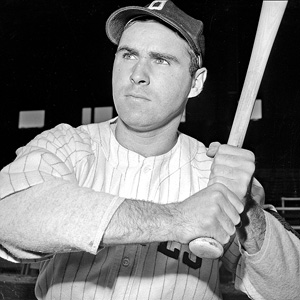 Tommy Holmes, 91 - Outfielder and two-time all-star who hit in 37 consecutive games in 1945 to set a modern National League record that stood until it was broken by Pete Rose in '78.
MAY
Buzzy Bavasi, 93 - Executive with the Dodgers who helped build teams that won four World Series titles in Brooklyn and Los Angeles, acquiring such players as Hall of Famers Jackie Robinson, Duke Snider, Pee Wee Reese, Roy Campanella, Sandy Koufax and Don Drysdale.
Herbert H. Hash, 97 - Pitched two seasons for the Boston Red Sox, compiling an 8-7 record with a 4.98 ERA in 38 appearances, including 12 starts, in 1940 and '41. Was oldest former Red Sox pitcher at time of his death.
JUNE
Johnny Buzhardt, 71 - Pitched in the major leagues from 1958-'68, compiling a 71-96 record with a 3.66 earned run average with the Chicago Cubs, Philadelphia, the Chicago White Sox, Baltimore and Houston.
Bert Shepard, 87 - World War II fighter pilot who lost his right leg when he was shot down over Germany but went on to pitch for the 1945 Washington Senators, becoming an inspiration for grievously wounded veterans. When he made his only major-league appearance on Aug. 4, 1945, the left-hander was still a lieutenant in the Army Air Forces, commuting to the ballpark from Walter Reed Army Hospital. Summoned from the bullpen against the Boston Red Sox in the fourth inning with the Senators trailing, 14-2, he pitched 5 1/3 innings and gave up one run and three hits. Pitched in the minor leagues for several years after the war and later won the national amputee golf championship in '68 and '71.
Bobby Murcer, 62 - Infielder turned outfielder who made his major-league debut at age 19 in 1965 with the New York Yankees, and was hyped as the heir apparent to the legendary Mickey Mantle. Later became a broadcaster with the Yankees.
Dave Ricketts, 73 - Longtime St. Louis Cardinals coach who first was a reserve catcher with the team in 1963, '65 and from '67-69. Traded to the Pittsburgh Pirates in '70, his final season in the majors.
Red Foley, 79 - New York baseball writer who spent 36 years as an official scorer. Starting in 1966, he scored more than 3,000 major-league games, including 10 World Series.
Jerome Holtzman, 82 - Chicago baseball writer who made the Hall of Fame, created the saves rule and later became Major League Baseball's official historian. Won the J.G. Spinks Award and a spot in the Hall of Fame in 1989.
Chuck Stobbs, 79 - Pitcher who gave up Mickey Mantle's 565-foot home run while pitching for Washington in 1953. That shot is credited with being the longest homer ever hit even as some later questioned the measurement. Had career record of 107-130 with an ERA of 4.29 with the Red Sox, White Sox, Senators, Cubs and Twins from '47-'61.
AUGUST
Skip Caray, 68 - Atlanta Braves broadcaster for 33 seasons and the son of the late Harry Caray, legendary announcer for the Chicago Cubs and White Sox and St. Louis Cardinals.
Dottie Collins, 84 - A star pitcher in women's professional baseball in the 1940s. Pitching for six seasons in the All-American Girls Professional Baseball League. In the summer of '48, she pitched until she was four months pregnant. She won more than 20 games in each of her first four seasons. She threw 17 shutouts and had a league-leading 293 strikeouts in '45 for the Fort Wayne Daisies.
SEPTEMBER
 Don Gutteridge, 96 - Manager of the Chicago White Sox in 1969 and '70. Played 12 seasons in the majors, beginning in September 1936 with the St. Louis Cardinals. Playing second and third base, also played with the St. Louis Browns, Pittsburgh Pirates and Boston Red Sox, batting .256 with 39 home runs and 391 RBI.
Joe Lutz, 83 – Played with the St. Louis Browns in 1951 and coached the Cleveland Indians from 1971 to 1973 and was the first Caucasian manager of a major league baseball team in Japan.
NOVEMBER
Elwin Charles "Preacher" Roe, 92 - Cunning left-handed pitcher best known as a member of the "Boys of Summer" Brooklyn Dodgers teams of the late 1940s and early '50s. Went 127-84 in a 12-year career with the Dodgers, Pittsburgh and St. Louis. Best year came in '51, when he was 22-3 for the Dodgers, setting a team record that still stands for the highest winning percentage for a 20-game winner.
Herb Score, 75 - Cleveland Indians pitcher and former broadcaster whose promise on the
 mound was shattered by a line drive when Gil McDougald of the New York Yankees lined a ball off Score's right eye, breaking his nose and a number of bones in his face. Hard-throwing left-hander pitched for the Indians from 1955-'59 and rookie of the year in '55 after going 16-10.
DECEMBER
Dock Ellis, 63 - Former major-league pitcher who spent 12 years in the majors with Pittsburgh, the New York Yankees, Oakland, Texas and the New York Mets. Best remembered for his flamboyance and social
Friday, December 26, 2008
Order the Official Voice of the St. Louis Browns Today
Subscribe Today to Pop Flies . . . the official voice of the St. Louis Browns.
We need your help to preserve the history and memory of the St. Louis Browns.
 Give a donation and subscribe to "Pop Flies" with membership in the St. Louis Browns Historical Society. Help preserve a critical part of St. Louis sports history. Order today to receive the Fall 2008 issue PLUS the Spring and Fall 2009 issues.
The current issue is loaded with dozen of short articles about Babe Ruth’s playing days against the St. Louis Browns in the 20 page issue.
You can order and pay on-line by clicking on the BUY NOW button in the upper right hand corner of this website. Your donation of $25 will have the current issue in the mail to you usually within 24 hours.
Here are a few featured items in the current newsletter.
* Babe Ruth's Last Visit to Sportsman's Park - 60 Years Ago this year
* Babe Ruth and the St. Louis Browns
* Babe Martin, Last of the Pennant Winning 1944 St. Louis Browns
* Fan's Memories of the Browns
* Browns Speakers Bureau Now Available
* Feats Exclusive to the Browns
* Brownie Trivia
* The Good Old Days of Baseball
* The Day the Trolleys Stopped . . . and a lot more.
Look for our announcement due out soon about the Spring 2009 Luncheon. We will be honoring Babe Martin as the last surviving member of the 1944 Browns. A number for former Browns players will be on hand. The exact date is April 28, 2009.
Mark your calendar.
We need your help to preserve the history and memory of the St. Louis Browns.
 Give a donation and subscribe to "Pop Flies" with membership in the St. Louis Browns Historical Society. Help preserve a critical part of St. Louis sports history. Order today to receive the Fall 2008 issue PLUS the Spring and Fall 2009 issues.
The current issue is loaded with dozen of short articles about Babe Ruth’s playing days against the St. Louis Browns in the 20 page issue.
You can order and pay on-line by clicking on the BUY NOW button in the upper right hand corner of this website. Your donation of $25 will have the current issue in the mail to you usually within 24 hours.
Here are a few featured items in the current newsletter.
* Babe Ruth's Last Visit to Sportsman's Park - 60 Years Ago this year
* Babe Ruth and the St. Louis Browns
* Babe Martin, Last of the Pennant Winning 1944 St. Louis Browns
* Fan's Memories of the Browns
* Browns Speakers Bureau Now Available
* Feats Exclusive to the Browns
* Brownie Trivia
* The Good Old Days of Baseball
* The Day the Trolleys Stopped . . . and a lot more.
Look for our announcement due out soon about the Spring 2009 Luncheon. We will be honoring Babe Martin as the last surviving member of the 1944 Browns. A number for former Browns players will be on hand. The exact date is April 28, 2009.
Mark your calendar.
MLB Network Programming for Jan. Features World Series Highlights to Classic Years
With 5 days to go before the MLB Network launches, many have wondered what type of archival footage and special programming will be available. Digging through MLBNetwork.com's schedule lineup for January reveals some nuggets.
January 28 –
(11:00pm ET) – World Series Highlights, featuring the 1944 World Series matchup between the St. Louis Cardinals vs. St. Louis Browns.
More programs at http://www.mlbnetwork.com/.
..

January 28 –
(11:00pm ET) – World Series Highlights, featuring the 1944 World Series matchup between the St. Louis Cardinals vs. St. Louis Browns.
More programs at http://www.mlbnetwork.com/.
..
Who was Ernie Nevers? With the Browns?
Some of the best athletes in the region annually tread the flawless artificial turf and composite track at Santa Rosa High’s Ernie Nevers Field. And it’s no slap in the face to state that none of them has a chance of matching the sporting exploits of the man whose name graces the scoreboard.
 Nevers was not your typical Golden Age sports star. His exploits read like tall tales spun around campfires and cold beers. (In this 1932 photo, Ernie Nevers, left, is shown with legendary football coach Glenn "Pop" Warner.)
Imagine a man who:
Outgained all “Four Horsemen” of Notre Dame while playing on two broken ankles.
Played 1,714 out of a possible 1,740 minutes of football with the NFL’s barnstorming Duluth Eskimos in 1926.
Owns the oldest mark still standing in the NFL record book.
Surrendered two home runs to Babe Ruth while with the Browns the year the Babe hit 60.
Brought down a Japanese Zero during World War II by hitting the plane with a football.
That last one isn’t real, or at least not verified. But that’s the thing about Ernie Nevers. The more you learn about his life, the more you are willing to believe. In a different era, people were awestruck just to make his acquaintance.
During Ernie Nevers’ junior year of high school, he and his parents left Superior, Wis., for Santa Rosa. George Nevers, Ernie’s father, bought a prune ranch opposite the brass foundry near the current intersection of Mission Boulevard and Highway 12.
It was the spring of 1919, and Ernie’s arrival was good news for the Santa Rosa High football team, which had formed the previous fall and stumbled through a winless season.
Nevers helped design plays, and carried or passed the ball on nearly every snap from the fullback position. He anchored the defense and kicked field goals and extra points, too.
“This lad seems to have an educated toe, for when he kicks his goals he never fails to make them,” The Press Democrat reported on Oct. 17, 1920.
A former Santa Rosa classmate, Raymond Clar, once wrote of trying to tackle the 187-pound Nevers in a scrimmage.
“I remember no particular pain,” Clar wrote. “I did exhibit, with some pride I must confess, a bit of flexiblity in my nose which healed itself about the time Ernie began to appear bigger than lifesize on huge roadside billboards as ‘America’s Greatest Athlete.’”
Riding Nevers’ broad shoulders — he scored 108 of 170 points, not including his touchdown passes — Santa Rosa finished 7-3 and won the Northwest Section of the California Interscholastic Federation before getting drubbed by a much deeper and stronger Berkeley High team in a playoff game.
Nevers immediately turned his attention to basketball, and dominated so thoroughly that he was named California high school basketball player of the year for 1920-21. Pretty impressive when you consider he played less than half the season.
After three league games, capped by a 32-point performance against Petaluma — the school yearbook, The Echo, called it “the most sensational scoring ever seen on any court in the country” — Nevers got an urgent message from his former coach in Wisconsin. The old team needed him desperately. So he abandoned Santa Rosa and traveled east, playing for Superior’s Central High the night he arrived.
But Nevers returned after graduation. He was a player-coach on Santa Rosa Junior College’s first football team in 1921, taking units at the JC to help him get into Stanford.
But football wasn’t his only pursuit. Nevers pitched three seasons for the St. Louis Browns, dishing up those two dingers to Ruth in a mostly lackluster career that saw him finish 6-12.
~~~~~~~~~
There's a lot more interesting facts about Ernie Nevers, a former Browns player, at:
http://www.pressdemocrat.com/article/20081224/SPORTS/812240203?Title=Who_was_Ernie_Nevers_
 Nevers was not your typical Golden Age sports star. His exploits read like tall tales spun around campfires and cold beers. (In this 1932 photo, Ernie Nevers, left, is shown with legendary football coach Glenn "Pop" Warner.)
Imagine a man who:
Outgained all “Four Horsemen” of Notre Dame while playing on two broken ankles.
Played 1,714 out of a possible 1,740 minutes of football with the NFL’s barnstorming Duluth Eskimos in 1926.
Owns the oldest mark still standing in the NFL record book.
Surrendered two home runs to Babe Ruth while with the Browns the year the Babe hit 60.
Brought down a Japanese Zero during World War II by hitting the plane with a football.
That last one isn’t real, or at least not verified. But that’s the thing about Ernie Nevers. The more you learn about his life, the more you are willing to believe. In a different era, people were awestruck just to make his acquaintance.
During Ernie Nevers’ junior year of high school, he and his parents left Superior, Wis., for Santa Rosa. George Nevers, Ernie’s father, bought a prune ranch opposite the brass foundry near the current intersection of Mission Boulevard and Highway 12.
It was the spring of 1919, and Ernie’s arrival was good news for the Santa Rosa High football team, which had formed the previous fall and stumbled through a winless season.
Nevers helped design plays, and carried or passed the ball on nearly every snap from the fullback position. He anchored the defense and kicked field goals and extra points, too.
“This lad seems to have an educated toe, for when he kicks his goals he never fails to make them,” The Press Democrat reported on Oct. 17, 1920.
A former Santa Rosa classmate, Raymond Clar, once wrote of trying to tackle the 187-pound Nevers in a scrimmage.
“I remember no particular pain,” Clar wrote. “I did exhibit, with some pride I must confess, a bit of flexiblity in my nose which healed itself about the time Ernie began to appear bigger than lifesize on huge roadside billboards as ‘America’s Greatest Athlete.’”
Riding Nevers’ broad shoulders — he scored 108 of 170 points, not including his touchdown passes — Santa Rosa finished 7-3 and won the Northwest Section of the California Interscholastic Federation before getting drubbed by a much deeper and stronger Berkeley High team in a playoff game.
Nevers immediately turned his attention to basketball, and dominated so thoroughly that he was named California high school basketball player of the year for 1920-21. Pretty impressive when you consider he played less than half the season.
After three league games, capped by a 32-point performance against Petaluma — the school yearbook, The Echo, called it “the most sensational scoring ever seen on any court in the country” — Nevers got an urgent message from his former coach in Wisconsin. The old team needed him desperately. So he abandoned Santa Rosa and traveled east, playing for Superior’s Central High the night he arrived.
But Nevers returned after graduation. He was a player-coach on Santa Rosa Junior College’s first football team in 1921, taking units at the JC to help him get into Stanford.
But football wasn’t his only pursuit. Nevers pitched three seasons for the St. Louis Browns, dishing up those two dingers to Ruth in a mostly lackluster career that saw him finish 6-12.
~~~~~~~~~
There's a lot more interesting facts about Ernie Nevers, a former Browns player, at:
http://www.pressdemocrat.com/article/20081224/SPORTS/812240203?Title=Who_was_Ernie_Nevers_
Friday, December 5, 2008
Stephens ahead of his time at short
Long before Cal Ripken Jr. and Alex Rodriguez picked up a bat, Vern Stephens held the honor as the greatest power-hitting shortstop in baseball history.
 He played 15 seasons for the St. Louis Browns/Baltimore Orioles (1941-47, '53-55), Boston Red Sox (1948-52) and Chicago White Sox (1953, '55). An eight-time All-Star, Stephens smacked 247 home runs with 1,174 RBIs, batting .286 with 1,859 hits. Cooperstown hasn't forgotten his power prowess.
 Stephens will be considered for the Class of 2009 at the Hall of Fame by the Veterans Committee. Any player receiving at least 75 percent of the vote from the Veterans Committee, which consists of the 64 living Hall of Famers, will be enshrined at Cooperstown.
Saturday, November 22, 2008
FOR SALE: Browns Memorabilia
I have a couple of Browns items in which your readers may be interested.
I have a 1953 schedule that is in perfect condition.
I also have a score card from a June 5 or 6, 1953 game: Browns vs Yankees. In the Yankee line-up are Mickey Mantle,Joe Collins, Billy Martin,Gil McDougald, Yogi Berra, Phil Rizzuto and Casey is the manager. The scorecard is 12 pages.
For the Browns: Johnny Groth, Vic Wertz, Clint Courtney, plus other assorted no-names and Marty Marion is the manager. Both of these items are in perfect condition.
Asking $50. Contact Mike Cleary at mikenbon@charter.net . (Click on photos to enlarge)
________________________________


I have a 1953 schedule that is in perfect condition.
I also have a score card from a June 5 or 6, 1953 game: Browns vs Yankees. In the Yankee line-up are Mickey Mantle,Joe Collins, Billy Martin,Gil McDougald, Yogi Berra, Phil Rizzuto and Casey is the manager. The scorecard is 12 pages.
For the Browns: Johnny Groth, Vic Wertz, Clint Courtney, plus other assorted no-names and Marty Marion is the manager. Both of these items are in perfect condition.
Asking $50. Contact Mike Cleary at mikenbon@charter.net . (Click on photos to enlarge)
________________________________
Friday, November 21, 2008
Browns Tip O'Neill One of 12 Not In Hall of Fame
Tip O'Neill is one of only 12 different players in the history of MLB to hit for the triple crown. He was the first to do it, and he remains as the ONLY player in the history of MLB to do it and NOT be inducted into the Hall of Fame.
Hitting for the triple crown is "known" as a sure way to get in the Hall of Fame, and many assume that hitting for the crown puts you in, for sure. It's true, except for O'Neill.
He hit for the triple crown, but so did 11 others. Here's a fact about O'Neill that no one else can say: O'Neill still remains as the only player in the history of MLB to lead the league in 2B, 3B, and HR during the same season, the only player ever. Many historians believe that accomplishment will never be duplicated.
His 1887 season was incredible. He had a .435 BA that season and that .435 BA still ranks second on the all-time single season BA list. His 167 R that season still ranks fourth on the all time single season R list. They were both MLB records at the time. Here are his stats for that 1887 season.
1887: .435 BA, .490 OB%, .691 SLG%, 30 SB, 167 R, 52 2B, 19 3B, 14 HR and 123 RBI.
Not a bad season, he not only led the league in BA, HR and RBI to hit for the triple crown. He also led the league in OB%, SLG%, R, 2B, 3B and hits. That's at least nine categories he led the league in.
I don't even know what the hell you call that. The Octagonagle crown, I don't even think that's enough. The only major categories that he didn't lead the league in were FA and SB and he had 30 SB, not bad.
(There is more to this story at: http://bleacherreport.com/articles/83523-tip-oneill-hit-for-the-triple-crown-still-not-in-the-hall-of-fame/poll_results#poll
or
http://tiny.cc/TipOneill
Hitting for the triple crown is "known" as a sure way to get in the Hall of Fame, and many assume that hitting for the crown puts you in, for sure. It's true, except for O'Neill.
He hit for the triple crown, but so did 11 others. Here's a fact about O'Neill that no one else can say: O'Neill still remains as the only player in the history of MLB to lead the league in 2B, 3B, and HR during the same season, the only player ever. Many historians believe that accomplishment will never be duplicated.
His 1887 season was incredible. He had a .435 BA that season and that .435 BA still ranks second on the all-time single season BA list. His 167 R that season still ranks fourth on the all time single season R list. They were both MLB records at the time. Here are his stats for that 1887 season.
1887: .435 BA, .490 OB%, .691 SLG%, 30 SB, 167 R, 52 2B, 19 3B, 14 HR and 123 RBI.
Not a bad season, he not only led the league in BA, HR and RBI to hit for the triple crown. He also led the league in OB%, SLG%, R, 2B, 3B and hits. That's at least nine categories he led the league in.
I don't even know what the hell you call that. The Octagonagle crown, I don't even think that's enough. The only major categories that he didn't lead the league in were FA and SB and he had 30 SB, not bad.
(There is more to this story at: http://bleacherreport.com/articles/83523-tip-oneill-hit-for-the-triple-crown-still-not-in-the-hall-of-fame/poll_results#poll
or
http://tiny.cc/TipOneill
Thursday, November 20, 2008
Browns Spring 2009 Luncheon Set for April
Back by popular demand, we are scheduling a St. Louis Browns Fan Club Spring 2009 luncheon tentatively set for April 28, 2009. The location is the Missouri Athletic Club West in West County at 1777 Des Peres Road St. Louis, MO 63131 (same location as the 2008 luncheon).
If you are not a member of the St. Louis Browns Fan Club, you can join with a donation of $25 to help preserve the memory and history of the Browns. Send your check payable to the St. Louis Brown's Fan Club to:
Bud Kane, Treasurer
443 Fieldcrest Dr.
Webster Groves, MO 63119.
Our Spring luncheon will honor Babe Martin, the last surviving member of the 1944 pennant winning Browns. The Browns played their only World Series against the St. Louis Cardinals.
Mark your calendar now to take in this outstanding program. Pictured below are John (Sandy) Buchheit on left with Jim Christen (right) at the Spring 2008 Brown's Fan Club Luncheon.
..

If you are not a member of the St. Louis Browns Fan Club, you can join with a donation of $25 to help preserve the memory and history of the Browns. Send your check payable to the St. Louis Brown's Fan Club to:
Bud Kane, Treasurer
443 Fieldcrest Dr.
Webster Groves, MO 63119.
Our Spring luncheon will honor Babe Martin, the last surviving member of the 1944 pennant winning Browns. The Browns played their only World Series against the St. Louis Cardinals.
Mark your calendar now to take in this outstanding program. Pictured below are John (Sandy) Buchheit on left with Jim Christen (right) at the Spring 2008 Brown's Fan Club Luncheon.
..
Monday, November 17, 2008
Kansas City Goes Major League in '54 Following Browns in '53
The announcement in November 1954 that Arnold Johnson had bought the Philadelphia Athletics was “really big news” in Kansas City. Accompanying the announcement of the purchase came the added tidbit that Johnson planned to relocate the team to Kansas City. This was a decision that carried great import beyond the obvious sense that Kansas City had finally “arrived” with its belated entry into Big League professional sports.
 The makeup of Major League Baseball began to change in 1952 when the Boston Braves indicated they would move their franchise to Milwaukee, Wisconsin. The following year the American League St. Louis Browns announced removal to Baltimore where they would be known as the Baltimore Orioles. In 1954, it was Kansas City’s turn. Pride exuded from Main Street to Bannister Road, newly annexed into the city itself.
----------------------------------
Once the move of the A’s to Kansas City was announced, city officials purchased Ruppert Stadium, added the upper deck to expand seating to 33,000, and made arrangements for everything but parking. This photo now graces the information kiosk at the site of the old stadium at 22nd & Brooklyn. (Click on photo to enlarge)
----------------------------------
For close to 60 years, Kansas City had been home to a minor league franchise in what evolved into the American Association. The Kansas City Blues were white Kansas City’s pride and joy. When the owner of the New York Yankees purchased the franchise in 1939, renovated Muehlebach Field into “Ruppert Stadium” [modestly named for himself], and sent the New York team’s best farm players this way, it seemed we had reached the pinnacle.
Of course, there was another tenant at Muehlebach Field that continued to pay rent to play in Ruppert Stadium. The Kansas City Monarchs of the Negro National League usually performed more successfully on the field although their attendance numbers often fell short of those attracted by the white Blues team. Interestingly, the Monarchs games featured integrated seating in the Stadium while the Blues required seating to be segregated by race.
During the years of the Blues and Monarchs co-occupancy of Muehlebach Field and then Ruppert Stadium, a number of current and future stars played for the teams. In their later Yankee-connected years, Mickey Mantle, Hank Bauer and Whitey Ford spent parts of their careers toiling at 22nd & Brooklyn for the Blues. The Monarchs featured the likes of Satchel Paige, Jackie Robinson and, of course, Buck O’Neil.
One player actually played for both the Monarchs and the Blues in the early 1950s—Elston Howard. A gifted catcher, Howard eventually became the backup, and then successor, to Yogi Berra in the Yankees lineup, but he made his debut playing for the Monarchs. Later, he signed with the Yankees who, in turn assigned him to the Blues to gain more experience before joining the major league team. He went on to a solid career in the Yankees organization.
 The makeup of Major League Baseball began to change in 1952 when the Boston Braves indicated they would move their franchise to Milwaukee, Wisconsin. The following year the American League St. Louis Browns announced removal to Baltimore where they would be known as the Baltimore Orioles. In 1954, it was Kansas City’s turn. Pride exuded from Main Street to Bannister Road, newly annexed into the city itself.
----------------------------------
Once the move of the A’s to Kansas City was announced, city officials purchased Ruppert Stadium, added the upper deck to expand seating to 33,000, and made arrangements for everything but parking. This photo now graces the information kiosk at the site of the old stadium at 22nd & Brooklyn. (Click on photo to enlarge)
----------------------------------
For close to 60 years, Kansas City had been home to a minor league franchise in what evolved into the American Association. The Kansas City Blues were white Kansas City’s pride and joy. When the owner of the New York Yankees purchased the franchise in 1939, renovated Muehlebach Field into “Ruppert Stadium” [modestly named for himself], and sent the New York team’s best farm players this way, it seemed we had reached the pinnacle.
Of course, there was another tenant at Muehlebach Field that continued to pay rent to play in Ruppert Stadium. The Kansas City Monarchs of the Negro National League usually performed more successfully on the field although their attendance numbers often fell short of those attracted by the white Blues team. Interestingly, the Monarchs games featured integrated seating in the Stadium while the Blues required seating to be segregated by race.
During the years of the Blues and Monarchs co-occupancy of Muehlebach Field and then Ruppert Stadium, a number of current and future stars played for the teams. In their later Yankee-connected years, Mickey Mantle, Hank Bauer and Whitey Ford spent parts of their careers toiling at 22nd & Brooklyn for the Blues. The Monarchs featured the likes of Satchel Paige, Jackie Robinson and, of course, Buck O’Neil.
One player actually played for both the Monarchs and the Blues in the early 1950s—Elston Howard. A gifted catcher, Howard eventually became the backup, and then successor, to Yogi Berra in the Yankees lineup, but he made his debut playing for the Monarchs. Later, he signed with the Yankees who, in turn assigned him to the Blues to gain more experience before joining the major league team. He went on to a solid career in the Yankees organization.
Tuesday, November 11, 2008
1922 Browns Second Best Team Ever to Not Win a Pennant
Wow. The 1922 St. L Browns were named the second best team ever to not win a pennant . . . according to a study by Chris Jaffe of The Hardball Times.
Read his analysis at: http://www.hardballtimes.com/main/article/october-countrys-refugees-part-2-of-2/. Here are some of his remarks . . .
"I asked one of the classic questions of baseball sports fans: who was the best team to never make the World Series? More importantly, I had a way to try to answer this question; ask SG from the Replacement Level Yankee Weblog to run 1,000 Diamondmind season sims with a computer program he set up to do just that. In part one, I went over the 28 teams I had SG enter into the sims. My guidelines for choosing teams were: 1) minimal (ideally no) overlap with a real pennant winners, 2) no overlap with another team in the mix, 3) try to represent all eras, 4) avoid really recent teams because they just might win a pennant still, and 6) if possible, try to avoid one-year wonders.
Read his entire report here -
http://www.hardballtimes.com/main/article/october-countrys-refugees-part-2-of-2/
Read his analysis at: http://www.hardballtimes.com/main/article/october-countrys-refugees-part-2-of-2/. Here are some of his remarks . . .
"I asked one of the classic questions of baseball sports fans: who was the best team to never make the World Series? More importantly, I had a way to try to answer this question; ask SG from the Replacement Level Yankee Weblog to run 1,000 Diamondmind season sims with a computer program he set up to do just that. In part one, I went over the 28 teams I had SG enter into the sims. My guidelines for choosing teams were: 1) minimal (ideally no) overlap with a real pennant winners, 2) no overlap with another team in the mix, 3) try to represent all eras, 4) avoid really recent teams because they just might win a pennant still, and 6) if possible, try to avoid one-year wonders.
Read his entire report here -
http://www.hardballtimes.com/main/article/october-countrys-refugees-part-2-of-2/
Sunday, November 9, 2008

Wednesday, November 5, 2008
Browns Players Still Hold Team Records After 55 Years
Team records for the Baltimore Orioles are mostly held by players from its earlier history as the St. Louis Browns. Here's a quick rundown on some key areas.
Single Season Records
Home Runs: Brady Anderson 50, 1996
Runs Batted In: Ken Williams 155, 1922 (Browns)
Batting Average: George Sisler .420, 1922 (Browns)
Hits: George Sisler 257, 1920 (Browns)
Runs: Harlond Clift 145, 1936 (Browns)
Doubles: Beau Bell 51, 1937 (Browns)
Triples: Heinie Manush 20, 1928 (Browns)
Stolen Bases: Luis Aparicio 57, 1964
Hitting Streak:
Walks: Lu Blue 126, 1929 (Browns)
Wins: Urban Shocker 27, 1921 (Browns)
Saves: Randy Myers 45, 1997
Strikeouts: [[Rube Waddell 232, 1908 (Browns)
Earned Run Average: Barney Pelty 1.59, 1906 (Browns)
Single Season Records
Home Runs: Brady Anderson 50, 1996
Runs Batted In: Ken Williams 155, 1922 (Browns)
Batting Average: George Sisler .420, 1922 (Browns)
Hits: George Sisler 257, 1920 (Browns)
Runs: Harlond Clift 145, 1936 (Browns)
Doubles: Beau Bell 51, 1937 (Browns)
Triples: Heinie Manush 20, 1928 (Browns)
Stolen Bases: Luis Aparicio 57, 1964
Hitting Streak:
Walks: Lu Blue 126, 1929 (Browns)
Wins: Urban Shocker 27, 1921 (Browns)
Saves: Randy Myers 45, 1997
Strikeouts: [[Rube Waddell 232, 1908 (Browns)
Earned Run Average: Barney Pelty 1.59, 1906 (Browns)
Monday, November 3, 2008
Ritenour selects Scheffing for Hall of Fame
Robert Scheffing, an alumni of Ritenour High School in St. Louis, MO, has been selected for the Ritenour High School Hall of Fame. The Hall of Fame was established in 1997 to honor Ritenour graduates for professional achievements, civic involvement and community service. 
Bob Scheffing, Class of 1930 was the most successful Ritenour athlete of his era. Scheffing was Ritenour's first major league baseball player and first graduate to become both a major league manager and general manager. He played catcher for the Chicago Cubs, Cincinnati Reds and St. Louis Cardinals; coached for the St. Louis Browns, Cubs and Milwaukee Braves; managed the Cubs and Detroit Tigers; and was general manger of the New York Mets.

Bob Scheffing, Class of 1930 was the most successful Ritenour athlete of his era. Scheffing was Ritenour's first major league baseball player and first graduate to become both a major league manager and general manager. He played catcher for the Chicago Cubs, Cincinnati Reds and St. Louis Cardinals; coached for the St. Louis Browns, Cubs and Milwaukee Braves; managed the Cubs and Detroit Tigers; and was general manger of the New York Mets.
Babe Ruth Feats
Three home runs in a World Series game twice...
The Babe hit 340 solo home runs, 252 two-run shots, and 98 three-run taters. He also slugged 16 Grand Slams...
51% of his homers came with a man or men on base...
 He hit 16 homers in extra-innings, 10 inside-the-park variety, and one as a pinch-hitter (in 1916 with the Red Sox)...
459 of his career regular season homers came against right-handed pitchers, or 64%. 219 times he blasted a circuit blow off a lefty...
In six seasons with the Red Sox he hit 49 homers, 11 in Fenway Park, 38 on the road. With the Yankees in 15 seasons, he slugged 659 long blows, 334 at home, 325 on the road...
Ruth hit at least one home run in 12 different ballparks...
72 times, Ruth slugged a pair of homers in a game, a major league record that still stands. He connected for three homers on May 21, 1930, with New York, and with the Braves on May 25, 1935, including the final homer of his career, off Pirate Guy Bush...
His 686 home runs as an outfielder are the most by any player at any position. He hit 15 long balls as a pitcher...
Collected RBI in 11 consecutive games in 1931...
Stole home 10 times...
Won two legs of the Triple Crown seven times (1919, 1920-1921, 1923-1924, 1926, 1928)...
First player to hit three home runs in a single game in the AL and NL... 11 consecutive games with at least one extra-base hit (August 28 to September 8, 1921) the second longest streak in major league history...
Holds the all-time single season record for most total bases (457 in 1921) and times reached base (375 in 1923)...
Three times he had 4 extra-base hits in a game...
Ruth had six five-hit games in his career...
Scored five runs in a game twice...
On April 20, 1926, he drove in eight runs, his career high...
Collected more RBI than games played in six seasons. (1921-27-29-30-31-32).
The Babe hit 340 solo home runs, 252 two-run shots, and 98 three-run taters. He also slugged 16 Grand Slams...
51% of his homers came with a man or men on base...
 He hit 16 homers in extra-innings, 10 inside-the-park variety, and one as a pinch-hitter (in 1916 with the Red Sox)...
459 of his career regular season homers came against right-handed pitchers, or 64%. 219 times he blasted a circuit blow off a lefty...
In six seasons with the Red Sox he hit 49 homers, 11 in Fenway Park, 38 on the road. With the Yankees in 15 seasons, he slugged 659 long blows, 334 at home, 325 on the road...
Ruth hit at least one home run in 12 different ballparks...
72 times, Ruth slugged a pair of homers in a game, a major league record that still stands. He connected for three homers on May 21, 1930, with New York, and with the Braves on May 25, 1935, including the final homer of his career, off Pirate Guy Bush...
His 686 home runs as an outfielder are the most by any player at any position. He hit 15 long balls as a pitcher...
Collected RBI in 11 consecutive games in 1931...
Stole home 10 times...
Won two legs of the Triple Crown seven times (1919, 1920-1921, 1923-1924, 1926, 1928)...
First player to hit three home runs in a single game in the AL and NL... 11 consecutive games with at least one extra-base hit (August 28 to September 8, 1921) the second longest streak in major league history...
Holds the all-time single season record for most total bases (457 in 1921) and times reached base (375 in 1923)...
Three times he had 4 extra-base hits in a game...
Ruth had six five-hit games in his career...
Scored five runs in a game twice...
On April 20, 1926, he drove in eight runs, his career high...
Collected more RBI than games played in six seasons. (1921-27-29-30-31-32).
Tuesday, October 28, 2008
Joe Lutz, x-Brownie Deceased
Whether he was coaching professional baseball players, helping high school and college athletes hone their skills or running the Boys Club of Sarasota for more than a decade, Joe Lutz had the same mission.
He wanted youths and young adults to develop self-confidence and the social skills that would help them succeed.
 "What we try to do here is teach a child how to stand on his or her own two feet and make wise decisions in life," Lutz said in 1986 after 10 years as executive director of the Boys Club. "We also teach them manners and to respect the rights of others."He died Monday at 83 after being in declining health in recent years from a stroke and diabetes.
After playing in baseball's minor leagues for several years after World War II, he briefly joined the majors with the St. Louis Browns in 1951. He was also a coach for the Cleveland Indians from 1971 to 1973 and was the first Caucasian manager of a major league baseball team in Japan.
He wanted youths and young adults to develop self-confidence and the social skills that would help them succeed.
 "What we try to do here is teach a child how to stand on his or her own two feet and make wise decisions in life," Lutz said in 1986 after 10 years as executive director of the Boys Club. "We also teach them manners and to respect the rights of others."He died Monday at 83 after being in declining health in recent years from a stroke and diabetes.
After playing in baseball's minor leagues for several years after World War II, he briefly joined the majors with the St. Louis Browns in 1951. He was also a coach for the Cleveland Indians from 1971 to 1973 and was the first Caucasian manager of a major league baseball team in Japan.

Thursday, October 23, 2008
Charles Hum, Baseball Scout Worked for Browns and Phillies
Charles Hum scoured ball yards in Chicago and throughout the Midwest in search of baseball talent as a scout for major-league teams, starting with the old St. Louis Browns.
Mr. Hum, 90, died, apparently of a heart attack, Sunday, Oct. 19, in the home in Chicago's Northwest Side Dunning neighborhood where he had lived since 1926, said his son Patrick.
He started umpiring for $2.50 a game, double that if his partner didn't show up, and in 1949 became a scout for the hapless Browns in the American League.
Mr. Hum, 90, died, apparently of a heart attack, Sunday, Oct. 19, in the home in Chicago's Northwest Side Dunning neighborhood where he had lived since 1926, said his son Patrick.
He started umpiring for $2.50 a game, double that if his partner didn't show up, and in 1949 became a scout for the hapless Browns in the American League.
Monday, October 6, 2008
Pop Quiz Featuring Bing Crosby
The film 'Going My Way,' which won the 1944 Oscar for Best Picture, features Bing Crosby, as a priest who is a big fan of a particular baseball team.
Name the team.
.
.
.
.
.
.
.
.
.
.
.
.
The St. Louis Browns. Bing was wearing a St. Louis Browns Jacket.
.
Name the team.
.
.
.
.
.
.
.
.
.
.
.
.
The St. Louis Browns. Bing was wearing a St. Louis Browns Jacket.
.
Friday, October 3, 2008
Champions often overcome handicaps, including having a bad temper
Many people have come from the rolls of the handicapped and acclaimed great status. In the sports world especially, many great champions were physically challenged.
Tommy Milton, whose name you probably won't remember, was the first race car driver to win the Indianapolis Grind twice. It was the most grueling 500-mile race in the world, and Milton accomplished his victories despite the fact that he only had one eye.
I remember this one very well. In 1945, a fellow named Gray wanted to play major league baseball, so he played his way through a couple of minor leagues and the St. Louis Browns signed him to a big league contract.
He played 77 games and batted .218 as the Browns leadoff hitter.
His full name was Pete Gray and he had only one arm, but he swung the bat very well, considering his handicap.
Once there was a boy named Johnny who was doomed to a life of illness. He was frail and weak, and the doctors suggested he take swimming exercises.
Until age 12, Johnny had never been in water deeper than that in the bathtub, but he finally learned to swim.
Johnny swam some in Lake Michigan and decided he liked it. The more he swam, the stronger he got, and he finally became the world's most famous swimmer.
His full name was Johnny Weissmuller, who was a champion swimmer and became Tarzan in the movies.
This has nothing to do with lameness, unless it was lameness of the brain. Babe Ruth was pitching against the Washington Senators in 1917 when umpire Brick Owens called his first three pitches balls. Ruth stormed off the mound and gave Owens a piece of his mind and told the umpire if he called the next pitch a ball, he would punch him on the nose.
Sure enough, the ball missed the plate, the batter walked, and Ruth punched Owens in the face.
He was promptly thrown out of the game and Ernie Shore came on in relief. The runner on first was caught stealing, and Shore retired the next 26 men, pitching a perfect game.
This one was not a cripple, but he once made a crack that created consternation in church. A student at Notre Dame, Knute Rockne was playing baseball on a warm day while Mass was being celebrated in a nearby chapel.
With windows open, the congregants were still rather warm when the priest asked, “How are you going to enter the kingdom of heaven?” and from outside, Rockne's voice boomed clearly through the open windows, “Slide, damn it, slide!”
Vernon (Lefty) Gomez, a great Yankee pitcher, was a clown. After his playing career he came to Asheville many times to scout ball players. He told funny stories. Here's one:
Tony Lazzeri, a Yankee infielder, was in the midst of a great fielding streak, and the New York newspapers were filled with his exploits. When a batter hit a ball back to Gomez, instead of throwing to first for the out, he threw to Lazerri.
After the game, Lazerri asked Gomez why he threw the ball to him, and Gomez answered, “I didn't know what to do with it, Tony, and I've been reading all week that you're the smartest fielder in the world, so I thought I'd let you decide where to throw it.”
Tommy Milton, whose name you probably won't remember, was the first race car driver to win the Indianapolis Grind twice. It was the most grueling 500-mile race in the world, and Milton accomplished his victories despite the fact that he only had one eye.
I remember this one very well. In 1945, a fellow named Gray wanted to play major league baseball, so he played his way through
 a couple of minor leagues and the St. Louis Browns signed him to a big league contract.
He played 77 games and batted .218 as the Browns leadoff hitter.
His full name was Pete Gray and he had only one arm, but he swung the bat very well, considering his handicap.
Once there was a boy named Johnny who was doomed to a life of illness. He was frail and weak, and the doctors suggested he take swimming exercises.
Until age 12, Johnny had never been in water deeper than that in the bathtub, but he finally learned to swim.
Johnny swam some in Lake Michigan and decided he liked it. The more he swam, the stronger he got, and he finally became the world's most famous swimmer.
His full name was Johnny Weissmuller, who was a champion swimmer and became Tarzan in the movies.
This has nothing to do with lameness, unless it was lameness of the brain. Babe Ruth was pitching against the Washington Senators in 1917 when umpire Brick Owens called his first three
 pitches balls. Ruth stormed off the mound and gave Owens a piece of his mind and told the umpire if he called the next pitch a ball, he would punch him on the nose.
Sure enough, the ball missed the plate, the batter walked, and Ruth punched Owens in the face.
He was promptly thrown out of the game and Ernie Shore came on in relief. The runner on first was caught stealing, and Shore retired the next 26 men, pitching a perfect game.
This one was not a cripple, but he once made a crack that created consternation in church. A student at Notre Dame, Knute Rockne was playing baseball on a warm day while Mass was being celebrated in a nearby chapel.
With windows open, the congregants were still rather warm when the priest asked, “How are you going to enter the kingdom of heaven?” and from outside, Rockne's voice boomed clearly through the open windows, “Slide, damn it, slide!”
Vernon (Lefty) Gomez, a great Yankee pitcher, was a clown. After his playing career he came to Asheville many times to scout ball players. He told funny stories. Here's one:
Tony Lazzeri, a Yankee infielder, was in the midst of a great fielding streak, and the New York newspapers were filled with his exploits. When a batter hit a ball back to Gomez, instead of throwing to first for the out, he threw to Lazerri.
After the game, Lazerri asked Gomez why he threw the ball to him, and Gomez answered, “I didn't know what to do with it, Tony, and I've been reading all week that you're the smartest fielder in the world, so I thought I'd let you decide where to throw it.”
Sunday, September 28, 2008
Mickey Vernon Came Close to Being A Brownie
Mickey Vernon died recently at age 90 at his home in Pennsylvania.
For 20 seasons, Vernon played in the major leagues with the Washington Senators, Cleveland Indians, Boston Red Sox, Milwaukee Braves and Pittsburgh Pirates. He was named to seven all-star teams, and won two American League batting titles. After his playing career ended in 1960, he remained in baseball as a manager, coach and scout, retiring as a scout for the New York Yankees in 1988.
For 20 seasons, Vernon played in the major leagues with the Washington Senators, Cleveland Indians, Boston Red Sox, Milwaukee Braves and Pittsburgh Pirates. He was named to seven all-star teams, and won two American League batting titles. After his playing career ended in 1960, he remained in baseball as a manager, coach and scout, retiring as a scout for the New York Yankees in 1988.
Last month, the baseball Hall of Fame's veterans committee chose Mr. Vernon as one of 10 finalists, whose playing careers started before 1942, for induction into the Hall this year.
 For most of his career, Mr. Vernon played for Washington. Unlike the baseball player for a fictional team inspired by the Senators in Damn Yankees, Mr. Vernon never sold his soul to the devil and never got to go to the World Series as a player.
 Though he was a first-base coach when the Pirates won the World Series in 1960, Mr. Vernon said that not playing for a World Series team was the only regret he had.
Mr. Vernon left the Pirates to manage the Senators for two-plus seasons. In his 70s, he was still fielding balls at old-timers' games, and played in golf tournaments this summer, said his daughter, Gay.
Mr. Vernon grew up playing sandlot baseball. He graduated from Eddystone High School. In 1937, he dropped out in his first year at Villanova University after he was recruited by the St. Louis Browns.
He played for Washington from 1939 to 1943, and then served in the Navy in the South Pacific during World War II. He returned to the team in 1946.
Friday, September 26, 2008
September 26: This Date in Browns Baseball
1926: The St. Louis Browns beat the New York Yankees 6-1 and 6-2 in 2 hours, 7 minutes. The first game took 55 minutes.
Wednesday, September 24, 2008
Some Baseball Trivia: Did You Know???
1. Owner of the Chicago Cubs, Bill Veeck, used to have midgets as food vendors at the clubs home ground, because he said that it meant that the paying public didn't have to have their view of the game spoiled!
2. The baseball tradition of spring training came about because in 1885 the Chicago White Stockings went to Hot Springs in Arkansas to prepare for the new season.
2. The baseball tradition of spring training came about because in 1885 the Chicago White Stockings went to Hot Springs in Arkansas to prepare for the new season.
3. Where is the world's longest baseball bat? The world's largest baseball bat is only 120 feet long weighing in at 68,000 pounds. It resembles the 34 inch wood bat that the Bambino, Babe Ruth Swung, made by Louisville Slugger. Want to see it in person it is located at : 800 West Main Street, Louisville, Kentucky at the Louisville Slugger Museum.
 4. Who was the shortest major league baseball player? (Click on photos to enlarge)
It was Edward Carl "Eddie" Gaedel , born in Chicago, Illinois, June 8, 1925. He was an American midget who became famous for participating in a MLB game who secretly signed by the St. Louis Browns. He was only 3 feet 7 inches (109 cm) tall and weighing 65 pounds (29.5 kg). His uniform number was 1/8. He had just one at bat for the Brown's in the second game of a doubleheader on Sunday, August 19, 1951.
They said Gaedel's strike zone measured just an inch and a half but it was probably closer to 6 inches. He reached base on four consecutive balls that were all high!
 4. Who was the shortest major league baseball player? (Click on photos to enlarge)
It was Edward Carl "Eddie" Gaedel , born in Chicago, Illinois, June 8, 1925. He was an American midget who became famous for participating in a MLB game who secretly signed by the St. Louis Browns. He was only 3 feet 7 inches (109 cm) tall and weighing 65 pounds (29.5 kg). His uniform number was 1/8. He had just one at bat for the Brown's in the second game of a doubleheader on Sunday, August 19, 1951.
They said Gaedel's strike zone measured just an inch and a half but it was probably closer to 6 inches. He reached base on four consecutive balls that were all high!
Gaedel's autograph now sells for more than Babe Ruth's. He died on June 18, 1961.
..
Wednesday, September 17, 2008

Tuesday, September 16, 2008
September 16: This Date in Browns Baseball
September 16
1924 - Jim Bottomley of the St. Louis Cardinals set a major-league baseball record by knocking in 12 runs in a single game.
1953 - The St. Louis Browns of the American League were given the OK to move to Baltimore, MD, where they became the Baltimore Orioles.
1924 - Jim Bottomley of the St. Louis Cardinals set a major-league baseball record by knocking in 12 runs in a single game.
1953 - The St. Louis Browns of the American League were given the OK to move to Baltimore, MD, where they became the Baltimore Orioles.
Monday, September 8, 2008
Don Gutteridge Dies
Don Gutteridge, who managed the Chicago White Sox in 1969-70, died Sunday, September 7, 2008 at his home. He was 96.
 Gutteridge took over as manager of the White Sox in May 1969 and posted a 109-172 record in his one-plus seasons. He had a 12-year playing career as an infielder with the St. Louis Cardinals, St. Louis Browns, Boston Red Sox and Pittsburgh Pirates, then spent another 12 years as Chicago's first base coach (1955-66).
As a second baseman with the Browns in 1944, Gutteridge took part in a then-record five double plays in one game during the team's only World Series appearance.
A member of the Kansas Sports Hall of Fame, Gutteridge was the oldest living former manager or coach in Major League Baseball at the time of his death.
After managing the White Sox, he served as scout for the Kansas City Royals, New York Yankees and Los Angeles Dodgers before finally retiring from baseball in 1992.
 Gutteridge took over as manager of the White Sox in May 1969 and posted a 109-172 record in his one-plus seasons. He had a 12-year playing career as an infielder with the St. Louis Cardinals, St. Louis Browns, Boston Red Sox and Pittsburgh Pirates, then spent another 12 years as Chicago's first base coach (1955-66).
As a second baseman with the Browns in 1944, Gutteridge took part in a then-record five double plays in one game during the team's only World Series appearance.
A member of the Kansas Sports Hall of Fame, Gutteridge was the oldest living former manager or coach in Major League Baseball at the time of his death.
After managing the White Sox, he served as scout for the Kansas City Royals, New York Yankees and Los Angeles Dodgers before finally retiring from baseball in 1992.
Saturday, September 6, 2008
Browns Pitching Record Almost Broke by Mariners Pitcher
Brandon Morrow pitched about as well in his first major league start as anyone in baseball history.
Morrow's bid to become only the second pitcher in modern history to throw a no-hitter in his first major league start ended when pinch-hitter Wilson Betemit doubled with two outs in the eighth inning, and the Seattle Mariners beat New York 3-1 Friday night.
The 24-year-old righty, whose 100 previous big league outings were all in relief, blanked the Yankees until Betemit, batting for Jose Molina, lined a clean drive far over right fielder Ichiro Suzuki. The hit scored Hideki Matsui, who had walked with one out on a close 3-2 pitch.
Bobo Holloman of the St. Louis Browns is the lone pitcher since 1900 to throw a no-hitter in his first big league start, doing it against the Philadelphia Athletics on May 6, 1953.
Morrow's bid to become only the second pitcher in modern history to throw a no-hitter in his first major league start ended when pinch-hitter Wilson Betemit doubled with two outs in the eighth inning, and the Seattle Mariners beat New York 3-1 Friday night.
The 24-year-old righty, whose 100 previous big league outings were all in relief, blanked the Yankees until Betemit, batting for Jose Molina, lined a clean drive far over right fielder Ichiro Suzuki. The hit scored Hideki Matsui, who had walked with one out on a close 3-2 pitch.
Bobo Holloman of the St. Louis Browns is the lone pitcher since 1900 to throw a no-hitter in his first big league start, doing it against the Philadelphia Athletics on May 6, 1953.
Wednesday, September 3, 2008
Intermediate baseball league named after Brown's Don Gutteridge
For several years, 13- to-15-year-old baseball players have been playing in a league simply known as the Intermediate League inside the JL Hutchinson League in Pittsburg.
Now, JL Hutchinson board members voted to change the name to the Don Gutteridge League beginning for the 2009 season.“Todd Biggs and I were talking and he thought that it would be a good way to honor him in the closing years of his life,” said JL Hutchinson League president Jack Bache.
Biggs, who co-authored a book with Gutteridge called “Getting To Know Baseball” that was published in the spring and handed out to each player in the JL Hutchinson League, said that he got the idea while he and Gutteridge were working on the book.
“Don and I worked a great deal together on the book and through the process it just donned on me about how appropriate it would be to do that,” Biggs said. “Originally, my thought would be that we would rename the Machine Pitch league.
“Just sitting there with Don when we were handing out books, it seemed like a perfect idea,” Biggs said. “I think that he will be tickled to hear about it.”
The board elected to rename the older league after Gutteridge.
“We thought that, since we have four leagues, and some of the board thought that the older league would be a better fit for him,” Bache said. “Mainly because of his Major League Baseball experience.”
Gutteridge, who turned 96 in June, played for the St. Louis Cardinals, St. Louis Browns, Boston Red Sox and Pittsburgh Pirates from 1936 to 1948.
After retiring as a player, Gutteridge was a coach for the Chicago White Sox from 1951-66 then again from 1968-69.“It was really easy (to change the name of the league),” Bache said. “It was unanimous and I think we may have wondered just why we did not do this earlier.”
Both Biggs and Bache said that players in the new Don Gutteridge League should benefit on the name change alone.
“I firmly believe that the ball players in Pittsburg will benefit from this simple name change,” Biggs said. “It gives them a success story to identify with and they will learn more about him when they play in the Don Gutteridge League.”
It can even be something that players can remember after their time playing.
“I think that it gives them something to hang their hat on,” Bache said. “Years from now, people can say that they played in the Don Gutteridge League and I think that will have a big impact on them.
Bache said that the board had discussed the name change earlier in the year but nothing materialized.
“I think we just don’t think about those things and we get busy with our day-to-day operations and it was something that we just did not think about,” Bache said. “We had talked about it earlier but we had never really gotten around to it.”
Bache and Biggs said that, if nothing else, the name change is a tribute to Gutteridge and what he has done for Pittsburg.
Now, JL Hutchinson board members voted to change the name to the Don
 Gutteridge League beginning for the 2009 season.“Todd Biggs and I were talking and he thought that it would be a good way to honor him in the closing years of his life,” said JL Hutchinson League president Jack Bache.
Biggs, who co-authored a book with Gutteridge called “Getting To Know Baseball” that was published in the spring and handed out to each player in the JL Hutchinson League, said that he got the idea while he and Gutteridge were working on the book.
“Don and I worked a great deal together on the book and through the process it just donned on me about how appropriate it would be to do that,” Biggs said. “Originally, my thought would be that we would rename the Machine Pitch league.
“Just sitting there with Don when we were handing out books, it seemed like a perfect idea,” Biggs said. “I think that he will be tickled to hear about it.”
The board elected to rename the older league after Gutteridge.
“We thought that, since we have four leagues, and some of the board thought that the older league would be a better fit for him,” Bache said. “Mainly because of his Major League Baseball experience.”
Gutteridge, who turned 96 in June, played for the St. Louis Cardinals, St. Louis Browns, Boston Red Sox and Pittsburgh Pirates from 1936 to 1948.

After retiring as a player, Gutteridge was a coach for the Chicago White Sox from 1951-66 then again from 1968-69.“It was really easy (to change the name of the league),” Bache said. “It was unanimous and I think we may have wondered just why we did not do this earlier.”
Both Biggs and Bache said that players in the new Don Gutteridge League should benefit on the name change alone.
“I firmly believe that the ball players in Pittsburg will benefit from this simple name change,” Biggs said. “It gives them a success story to identify with and they will learn more about him when they play in the Don Gutteridge League.”
It can even be something that players can remember after their time playing.
“I think that it gives them something to hang their hat on,” Bache said. “Years from now, people can say that they played in the Don Gutteridge League and I think that will have a big impact on them.
Bache said that the board had discussed the name change earlier in the year but nothing materialized.
“I think we just don’t think about those things and we get busy with our day-to-day operations and it was something that we just did not think about,” Bache said. “We had talked about it earlier but we had never really gotten around to it.”
Bache and Biggs said that, if nothing else, the name change is a tribute to Gutteridge and what he has done for Pittsburg.
Saturday, August 30, 2008
August 30 - This Date in Browns Baseball
1912 - Earl Hamilton of the St. Louis Browns pitched a 5-1 no-hitter against the Tigers at Detroit.
1916 - Dutch Leonard of the Boston Red Sox pitched a no-hitter against the St. Louis Browns for a 4-0 victory.
1916 - Dutch Leonard of the Boston Red Sox pitched a no-hitter against the St. Louis Browns for a 4-0 victory.
August 31 - This Date in Browns Baseball
1924 - Urban Shocker of the St. Louis Browns pitched two complete games against the Chicago White Sox and won both, 6-2.
1930 - Wes Ferrell of Cleveland beat the St. Louis Browns 9-5 for his 13th straight victory.
1930 - Wes Ferrell of Cleveland beat the St. Louis Browns 9-5 for his 13th straight victory.
Monday, August 25, 2008
Brownie, Vern Stephens, Nominated for Hall of Fame
Former Most Valuable Player Award winners Bucky Walters and Joe Gordon were among the 10 players announced Monday as qualifying for the Veterans Committee ballot of candidates from the pre-1943 era for the National Baseball Hall of Fame in 2009.
 A 12-member committee comprised of Hall of Famers, historians and media members will meet Dec. 7 during the Winter Meetings in Las Vegas with the election results to be revealed Dec. 8. Voters may choose up to four players. As in the other Hall of Fame elections, a 75 percent plurality is required for election. Any candidate who receives nine or more votes will be inducted at the 2009 ceremonies July 26 at the Clark Sports Center in Cooperstown, N.Y. (Click on photo to enlarge)
 In addition to Walters, a pitcher, and Gordon, a second baseman, the other nominees are pitchers Wes Ferrell, Carl Mays and Allie Reynolds; catcher-third baseman Deacon White; first baseman Mickey Vernon; shortstop Bill Dahlen; outfielder-first baseman Sherry Magee and shortstop-third baseman Vern Stephens.
Stephens was the shortstop on the only St. Louis Browns club to win a pennant, in 1944, and also played for the Red Sox, White Sox and Orioles over 15 seasons (1941-55). The right-handed slugger led the AL in RBIs three times with a high of 159 with Boston in 1949, the middle year of a three-year stretch in which Stephens drove in 440 runs. The eight-time All-Star had a .286 career batting average with 1,859 hits, including 247 home runs.
Dottie Collins, 84, Star Pitcher of Women’s Baseball League, Dies
Dottie Collins, who was a star pitcher in women’s professional baseball in the 1940s and later played a major role in preserving the history of the women’s game, died Tuesday in Fort Wayne, Ind. She was 84. The cause was a stroke, said her son-in-law, Michael Tyler.
 Pitching for six seasons in the All-American Girls Professional Baseball League, created in 1943 to provide home front entertainment while many major leaguers were off to war, Collins dazzled opposing batters. (Click on photos to enlarge)
She pitched underhand, sidearm and overhand; she threw curveballs, fastballs and changeups; and in the summer of 1948, she pitched until she was four months pregnant. She won more than 20 games in each of her first four seasons. She threw 17 shutouts and had a league-leading 293 strikeouts in 1945 for the Fort Wayne Daisies, when the women’s game resembled fast-pitch softball.
 Pitching for six seasons in the All-American Girls Professional Baseball League, created in 1943 to provide home front entertainment while many major leaguers were off to war, Collins dazzled opposing batters. (Click on photos to enlarge)
She pitched underhand, sidearm and overhand; she threw curveballs, fastballs and changeups; and in the summer of 1948, she pitched until she was four months pregnant. She won more than 20 games in each of her first four seasons. She threw 17 shutouts and had a league-leading 293 strikeouts in 1945 for the Fort Wayne Daisies, when the women’s game resembled fast-pitch softball.
But Collins’s greatest contribution to women’s baseball may have come when its ball clubs had long been forgotten.
The Baseball Hall of Fame in Cooperstown, N.Y., had been considering an exhibition on women and baseball during the mid-1980s, but, as Ted Spencer, its chief curator, recalled in an interview, it had little material to display until Collins approached him.
“When I connected with Dottie, the ball started to roll,” Spencer said. “If it wasn’t for her, I don’t know where it would have gone.”
In 1987, Collins helped form an association of former players in the All-American league. She drew on her contacts to provide the Hall of Fame with memorabilia from the league, spurring creation of its Women in Baseball exhibit in 1988. Now an enlarged, permanent collection, the exhibit inspired the 1992 Hollywood movie “A League of Their Own,” a reprise of women’s pro baseball during World War II.
More information is at: http://www.nytimes.com/2008/08/17/sports/baseball/17collins.html?_r=1&oref=slogin
Saturday, August 23, 2008
Orthwein Moves Brewers to St. Louis in 1901; Renames Them the Browns
The news obituary of James Busch Orthwein, former owner of the New England Patriots, correctly noted Mr. Orthwein's indispensible role in bringing the St. Louis Rams to town. You may be interested to know that James was not the first St. Louis Orthwein to own a pro franchise and bring one to St. Louis.
In 1901, Ralph H. Orthwein led a syndicate of wealthy business people that purchased the Milwaukee Brewers of the American League after the 1901 season and moved the baseball team to St. Louis and renamed them the Browns. The recently-deceased Mr. Orthwein was the first-cousin to Ralph Orthwein, once removed.
/s/ Emmett McAuliffe
Board, St. Louis Browns Fan Club
In 1901, Ralph H. Orthwein led a syndicate of wealthy business people that purchased the Milwaukee Brewers of the American League after the 1901 season and moved the baseball team to St. Louis and renamed them the Browns. The recently-deceased Mr. Orthwein was the first-cousin to Ralph Orthwein, once removed.
/s/ Emmett McAuliffe
Board, St. Louis Browns Fan Club
Dizzy Dean Was Crazy Like a Fox
Crazy Like a Fox Was Diz, 37, still good enough to pitch? The 1947 Browns threw him Opening Day. Dean singled, spaced three hits in four innings, then pulled a muscle.
The soon-again-Voice gave a lecture: "Radio Announcing I Have Did." The Soviets domineered Eastern Europe. "Got to get me a bunch of bats and balls and sneak me a couple of empires and learn them kids behind the Iron Curtain how to bat and play baseball." Marshal Stalin -- "Joe Stallion" -- could run concessions. "That way he'd getta outta' politics and get in a honest business."
Through 1948, Diz jazzed the tone-deaf Browns. "I slud along with them as long as I could, but I eventual made up my mind to quit."
(You can read a lot more about Dizzy and broadcasting at: http://curtsmith.mlblogs.com/archives/2006/02/dizzy_dean_easi.html)

The soon-again-Voice gave a lecture: "Radio Announcing I Have Did." The Soviets domineered Eastern Europe. "Got to get me a bunch of bats and balls and sneak me a couple of empires and learn them kids behind the Iron Curtain how to bat and play baseball." Marshal Stalin -- "Joe Stallion" -- could run concessions. "That way he'd getta outta' politics and get in a honest business."
Through 1948, Diz jazzed the tone-deaf Browns. "I slud along with them as long as I could, but I eventual made up my mind to quit."
(You can read a lot more about Dizzy and broadcasting at: http://curtsmith.mlblogs.com/archives/2006/02/dizzy_dean_easi.html)
Tuesday, August 19, 2008
This date in baseball: August 19
AUG. 19
1951: Eddie Gaedel, a 65-pound midget who was 3 feet 7, made his only plate appearance as a pinch hitter for Frank Saucier of the St. Louis Browns. Gaedel, wearing No. 1/8, was walked on four pitches by Detroit Tigers pitcher Bob Cain and then was taken out for pinch runner Jim Delsing. The gimmick by Browns owner Bill Veeck was completely legal but later outlawed.
1931 - Babe Ruth hit his 600th home run as the Yankees beat the St. Louis Browns 11-7.
1931 - Lefty Grove of the Philadelphia Athletics was beaten 1-0 by Dick Coffman of the St. Louis Browns, snapping a personal 16-game winning streak. A misjudged fly ball by outfielder Jim Moore led to the winning run.
1936 - In his first major league start, 17-year-old Bob Feller struck out 15 Browns as the Cleveland Indians beat St. Louis 4-1. Feller gave up six hits and allowed four walks.
1951: Eddie Gaedel, a 65-pound midget who was 3 feet 7, made his only plate appearance as a pinch hitter for Frank Saucier of the St.
 Louis Browns. Gaedel, wearing No. 1/8, was walked on four pitches by Detroit Tigers pitcher Bob Cain and then was taken out for pinch runner Jim Delsing. The gimmick by Browns owner Bill Veeck was completely legal but later outlawed.
1931 - Babe Ruth hit his 600th home run as the Yankees beat the St. Louis Browns 11-7.
1931 - Lefty Grove of the Philadelphia Athletics was beaten 1-0 by Dick Coffman of the St. Louis Browns, snapping a personal 16-game winning streak. A misjudged fly ball by outfielder Jim Moore led to the winning run.
1936 - In his first major league start, 17-year-old Bob Feller struck out 15 Browns as the Cleveland Indians beat St. Louis 4-1. Feller gave up six hits and allowed four walks.
Friday, August 15, 2008
The Toast of The Town
With a 7-1 victory over the Padres on Wednesday night in August (2008), newest Brewer CC Sabathia improved to 7-0 in beer stripes, marking the third-longest undefeated streak for a starting pitcher following a midseason trade in the last 90 years.
Elias Sports Bureau says the only more impressive introductions were Virgil Trucks' 8-0 start with the White Sox after being traded from the St. Louis Browns in 1953 and Doyle Alexander's legendary 9-0 pennant-clinching finish for the Tigers after coming over from the Braves for a young John Smoltz in 1987.
Bet you didn't know that!
Elias Sports Bureau says the only more impressive introductions were Virgil Trucks' 8-0 start with the White Sox after being traded from the St. Louis Browns in 1953 and Doyle Alexander's legendary 9-0 pennant-clinching finish for the Tigers after coming over from the Braves for a young John Smoltz in 1987.
Bet you didn't know that!
Monday, August 11, 2008
IBAF Revises Extra Innings Rule; Veeck Had Nothing To Do With This
The International Baseball Federation (IBAF) announced recently that it is introducing an extra-inning tie-breaker format that will be tested at a youth event this week and implemented officially in the baseball competition at the Beijing 2008 Olympic Games.
 The format is a first in international baseball competition and differs significantly from the currently used extra-inning model. The new rule calls for traditional baseball extra-inning rules to be used in the 10th frame, but all contests that are tied after 10 innings will compete under a new format. Beginning with the 11th inning and each inning needed thereafter, base runners will be placed on first and second base with no outs. All other rules of baseball will remain in effect.
The new rules will be taken into effect for all tournaments under the IBAF competition umbrella moving forward, which includes the IBAF Men’s and Women’s Baseball World Cup which are scheduled for September 9-27, 2009 in Europe and August 24-29, 2008 in Matsuyama, Japan, respectively.
Baseball and softball are making their last appearance for a while, after the International Olympic Committee voted to eliminate the sports from the 2012 London Games. Both sports are working to be reinstated for the 2016 Olympics.
“The upcoming Beijing Olympic competition may be our last unless we are successful in adding the sport back to the Olympic program for the 2016 Games,” said IBAF President Dr. Harvey W. Schiller. “We must demonstrate to the International Olympic Committee not only does our game belong alongside the other great sports of the world, but our sport is manageable from a television and operational standpoint.”
Dr. Schiller continued, saying the change is both a positive and necessary step for the sport of baseball.“One of the unique aspects of our game is that it has no time limit. Extra-inning contests can bring about the most exciting results for players and fans, but such circumstances also make it difficult in the context of the Olympic program. Delays cause scheduling and logistical nightmares. Planned security, transportation, drug testing, broadcasts, and entertainment are just a few of the activities that may be seriously affected,” Dr. Schiller continued.
Many former and current professional players and administrators from baseball federations around the world provided guidance on the rule change. The new tie-breaker will be tested beginning at the IBAF “AAA” World Junior Championships in Edmonton, Canada, which is the premiere international tournament for players 18-and-under.
The new extra-inning format will allow for each manager to select two consecutive batters from anywhere in their respective lineup to start the 11th on first and second base. The next batter in the lineup would then be the batter that starts the inning at the plate. Once those players/runners are determined for the 11th inning, the order of any subsequent innings will be determined by how the previous inning ended. That is, if the 11th inning ends with the #6 hitter having the last official at bat, then the 12th inning begins the #7 hitter at bat, and the #5 hitter at 2B and the #6 hitter at first base.
“Given these extraordinary times for baseball, I believe this will be an exciting shift for the sport,” Dr. Schiller said.
Extra-Inning Rule (to be added to the IBAF Competition Norms):If the game remains tied after the completion of ten (10) innings, the following procedures will be implemented during extra innings:
• Each team will begin the 11th inning (and any subsequent necessary extra innings) with a player on first and second, no outs.
• To begin the 11th inning, representatives from each team will meet at home plate and will indicate (at the same time) to the home plate umpire where the team wishes to begin the batting order. That is, the teams have the option of beginning the 11th inning anywhere in the existing batting order that was in effect when the 10th inning ended. Note that this is not a new lineup (just potentially a different order), and it may very well be the same lineup that ended the 10th inning. The rationale for doing so is to ensure that both teams have an equal chance at having what theyconsider to be their best hitters and base runners in a position to score in the 11th inning.
• For example, if the team decides to have the #1 hitter in the lineup hit first, then the #8 hitter will be placed at 2B and the #9 hitter will be placed at 1B. Furthermore, if the team decides to have the #3 hitter in the lineup hit first, then the #1 hitter would be at 2B and the #2 hitter would be at1B.
• Once those players/runners are determined for the 11th inning, the order of any subsequent innings will be determined by how the previous inning ended. That is, if the 11th inning ends withthe #6 hitter having the last plate appearance (PA), then the 12th inning begins the #7 hitter at bat, and the #5 hitter at 2B and the #6 hitter at first base.
• With the exception of beginning the inning with runners on 1B and 2B with no one out, all other “Official Rules of Baseball” and “IBAF Competition Norms” will remain in effect during extra innings required to determine a winner.
• No player re-entry is permitted during extra innings.
• The traditional system of the visiting team hitting in the top of the inning and the home team hitting in the bottom of the inning will remain in effect until a winner is determined.
Note: Neither Bill Veeck or any member of his family has anything to do with this ruling.
 The format is a first in international baseball competition and differs significantly from the currently used extra-inning model. The new rule calls for traditional baseball extra-inning rules to be used in the 10th frame, but all contests that are tied after 10 innings will compete under a new format. Beginning with the 11th inning and each inning needed thereafter, base runners will be placed on first and second base with no outs. All other rules of baseball will remain in effect.
The new rules will be taken into effect for all tournaments under the IBAF competition umbrella moving forward, which includes the IBAF Men’s and Women’s Baseball World Cup which are scheduled for September 9-27, 2009 in Europe and August 24-29, 2008 in Matsuyama, Japan, respectively.
Baseball and softball are making their last appearance for a while, after the International Olympic Committee voted to eliminate the sports from the 2012 London Games. Both sports are working to be reinstated for the 2016 Olympics.
“The upcoming Beijing Olympic competition may be our last unless we are successful in adding the sport back to the Olympic program for the 2016 Games,” said IBAF President Dr. Harvey W. Schiller. “We must demonstrate to the International Olympic Committee not only does our game belong alongside the other great sports of the world, but our sport is manageable from a television and operational standpoint.”
Dr. Schiller continued, saying the change is both a positive and necessary step for the sport of baseball.“One of the unique aspects of our game is that it has no time limit. Extra-inning contests can bring about the most exciting results for players and fans, but such circumstances also make it difficult in the context of the Olympic program. Delays cause scheduling and logistical nightmares. Planned security, transportation, drug testing, broadcasts, and entertainment are just a few of the activities that may be seriously affected,” Dr. Schiller continued.
Many former and current professional players and administrators from baseball federations around the world provided guidance on the rule change. The new tie-breaker will be tested beginning at the IBAF “AAA” World Junior Championships in Edmonton, Canada, which is the premiere international tournament for players 18-and-under.
The new extra-inning format will allow for each manager to select two consecutive batters from anywhere in their respective lineup to start the 11th on first and second base. The next batter in the lineup would then be the batter that starts the inning at the plate. Once those players/runners are determined for the 11th inning, the order of any subsequent innings will be determined by how the previous inning ended. That is, if the 11th inning ends with the #6 hitter having the last official at bat, then the 12th inning begins the #7 hitter at bat, and the #5 hitter at 2B and the #6 hitter at first base.
“Given these extraordinary times for baseball, I believe this will be an exciting shift for the sport,” Dr. Schiller said.
Extra-Inning Rule (to be added to the IBAF Competition Norms):If the game remains tied after the completion of ten (10) innings, the following procedures will be implemented during extra innings:
• Each team will begin the 11th inning (and any subsequent necessary extra innings) with a player on first and second, no outs.
• To begin the 11th inning, representatives from each team will meet at home plate and will indicate (at the same time) to the home plate umpire where the team wishes to begin the batting order. That is, the teams have the option of beginning the 11th inning anywhere in the existing batting order that was in effect when the 10th inning ended. Note that this is not a new lineup (just potentially a different order), and it may very well be the same lineup that ended the 10th inning. The rationale for doing so is to ensure that both teams have an equal chance at having what theyconsider to be their best hitters and base runners in a position to score in the 11th inning.
• For example, if the team decides to have the #1 hitter in the lineup hit first, then the #8 hitter will be placed at 2B and the #9 hitter will be placed at 1B. Furthermore, if the team decides to have the #3 hitter in the lineup hit first, then the #1 hitter would be at 2B and the #2 hitter would be at1B.
• Once those players/runners are determined for the 11th inning, the order of any subsequent innings will be determined by how the previous inning ended. That is, if the 11th inning ends withthe #6 hitter having the last plate appearance (PA), then the 12th inning begins the #7 hitter at bat, and the #5 hitter at 2B and the #6 hitter at first base.
• With the exception of beginning the inning with runners on 1B and 2B with no one out, all other “Official Rules of Baseball” and “IBAF Competition Norms” will remain in effect during extra innings required to determine a winner.
• No player re-entry is permitted during extra innings.
• The traditional system of the visiting team hitting in the top of the inning and the home team hitting in the bottom of the inning will remain in effect until a winner is determined.
Note: Neither Bill Veeck or any member of his family has anything to do with this ruling.
Wednesday, August 6, 2008
Legends to get their due in Hampton Roads African American Sports Hall of Fame
Joe Vann Durham, a former Negro Leagues player from Newport News who was the first athlete from the Peninsula to sign a "big-league" baseball contract, will be inducted into the Hampton Roads African American Sports Hall of Fame.
Durham began his pro baseball career in 1952 with the Chicago American Giants of the Negro American League. The St. Louis Browns signed him in 1953 and assigned him to the York (Pa.) White Roses of the Piedmont League. Durham helped to break the color line in a league with teams in the then-segregated states of Maryland and Virginia. He had a productive year despite enduring poor living conditions and racial slurs.
Durham led the Huntington High Vikings to the 1948-1949 Eastern District basketball championship. Durham was named the tournament's outstanding player and made the all-district team.
For more information, visit: http://www.dailypress.com/sports/dp-spt_hraahof_0806aug06,0,1062373.story
Durham began his pro baseball career in 1952 with the Chicago American Giants of the Negro American League. The St. Louis Browns signed him in 1953 and assigned him to the York (Pa.) White Roses of the Piedmont League. Durham helped to break the color line in a league with teams in the then-segregated states of Maryland and Virginia. He had a productive year despite enduring poor living conditions and racial slurs.
Durham led the Huntington High Vikings to the 1948-1949 Eastern District basketball championship. Durham was named the tournament's outstanding player and made the all-district team.
For more information, visit: http://www.dailypress.com/sports/dp-spt_hraahof_0806aug06,0,1062373.story
Tuesday, August 5, 2008
A's Bert Shepard Dead at 87
Several years back, the Philadelphia Athletics Historical Society annual reunion was a salute to veterans of World War II highlighted by Hall of Famer Bob Feller. Feller remarked that most of the real heroes never made it home.
Of course, Lou Brissie was one that did but also present was Bert Shepard who returned from war missing a leg. With an artificial leg, he had the unrealistic dream of pitching in the major leagues. Monty Stratton, who was the subject of a movie, lost a leg in a hunting accident but while he appeared in some minor league action never returned to the big leagues.Prior to his acccident he pitched for the Chicago White Sox.
On August 4, 1945, the impossible dream came true as Shepard took the mound for the Washingon Senators against the Boston Red Sox and pitched over 5 innings allowing only one run for an earned run average of 1.69.
Men such as Brissie and Shepard served as an inspiration to countless war veterans with disabilities and Brissie continues to visit and encourage veterans of the present conflict.
Monday, August 4, 2008
Former Athletics pitcher Porter Vaughan Passes Away
Porter Vaughan departed this life on July 30, 2008 at the age of 89. Cecil Porter Vaughan was born in Stevensville, VA in 1919.
 Porter Vaughan remembered pitching to the great Ted Williams in that memorable double header on the last day of the 1941 season when Williams maintained his batting average above .400 (.406) although he could have sat out and protected his average.
Vaughan pitched for the A's in 1940 and 1941 and spent the years from 1942 to 1945 serving his country. In 1946 he returned to the Philadelphia A's. He had also pitched in the International League and American Association. 58 surviving players from the Athletics are left.
 Porter Vaughan remembered pitching to the great Ted Williams in that memorable double header on the last day of the 1941 season when Williams maintained his batting average above .400 (.406) although he could have sat out and protected his average.
Vaughan pitched for the A's in 1940 and 1941 and spent the years from 1942 to 1945 serving his country. In 1946 he returned to the Philadelphia A's. He had also pitched in the International League and American Association. 58 surviving players from the Athletics are left.
Saturday, August 2, 2008
Teams No Longer Existing in Their Original Cities
Of the 16 clubs that existed unchanged for fifty years (1902-52), the following legendary names no longer exist as living, breathing entities in their original cities:
American League
Philadelphia Athletics
St. Louis Browns
Washington Senators **
If the new 3rd incarnation of a Washington club in 2005 really wants the name "Senators", they will have to buy it from the Texas Rangers, who own the rights from their brief term in Washington as the 2nd coming of that club.
National League
Boston Braves
Brooklyn Dodgers
New York Giants
American League
Philadelphia Athletics
St. Louis Browns
Washington Senators **
If the new 3rd incarnation of a Washington club in 2005 really wants the name "Senators", they will have to buy it from the Texas Rangers, who own the rights from their brief term in Washington as the 2nd coming of that club.
National League
Boston Braves
Brooklyn Dodgers
New York Giants
This Date In Browns History
You can help build a calendar for "this date in Browns histroy" at the Browns Forum page at: http://www.baseball-fever.com/showthread.php?t=19216
This thread will work best with broad contribution from all of you old Browns fans. The object is to fill in the calendar pages with special or peculiar moments in Browns history. (The author threw in the word "peculiar" because they had so many things happen that properly fall into that category.)
He starts things off with one that some of you may have read about that seems to fill the bill as a baseball oddity. Hopefully, someone else will have something to cover tomorrow. It would be great to eventually fill every day of the year. Such a background of information would make great material for a St. Louis Browns calendar or day planner. That is, if you don't mind starting your day with frequently painful reminders.
Check it out at: http://www.baseball-fever.com/showthread.php?t=19216
This thread will work best with broad contribution from all of you old Browns fans. The object is to fill in the calendar pages with special or peculiar moments in Browns history. (The author threw in the word "peculiar" because they had so many things happen that properly fall into that category.)
He starts things off with one that some of you may have read about that seems to fill the bill as a baseball oddity. Hopefully, someone else will have something to cover tomorrow. It would be great to eventually fill every day of the year. Such a background of information would make great material for a St. Louis Browns calendar or day planner. That is, if you don't mind starting your day with frequently painful reminders.
Check it out at: http://www.baseball-fever.com/showthread.php?t=19216
Friday, August 1, 2008
Browns Set Record For Consecutive Sunday Losses
The St. Louis Browns - the ancestors of today's National League Cardinals - set the record for consecutive Sunday losses in 1898 at 17. A later Browns team in the American League moved to Baltimore after the 1953 season and became the Orioles.
Could someone attached to the 1898 Browns have created some mini-curse to ensnare the Orioles more than a century later?
Andy Jones, 46, wore an American League St. Louis Browns hat to yesterday's game. Being from St. Louis, honoring the team that moved to Baltimore is his way of warming up to the Orioles a year after moving to North Potomac, he said.
Could someone attached to the 1898 Browns have created some mini-curse to ensnare the
 Orioles more than a century later?
Andy Jones, 46, wore an American League St. Louis Browns hat to yesterday's game. Being from St. Louis, honoring the team that moved to Baltimore is his way of warming up to the Orioles a year after moving to North Potomac, he said.
August 1: Browns Walk 11 Times But Lose 9-0
Back on this day in 1941, Lefty Gomez of the Yankees set a major league record by tossing a complete game shutout while walking 11. The Yankees beat the St. Louis Browns on a Ladies Day at Yankee Stadium by a 9-0 score.
The Browns also had give hits against Gomez and reached on a Phil Rizzuto error. But two double plays and an epic of day of not hitting with runners on base doomed the Browns. St. Louis left 15 runners on base in the game.
 Joe DiMaggio's second long hitting streak of 1941 reached 15 games on this day. DiMaggio would get a single in the next game and his streak ended up being 72 out of 73 games.
Gomez was not exactly a control pitcher and he topped triple digits in walks in four seasons and was at 99 in another year.
The Ladies Day crowd drew a whopping 8730 fans to Yankee Stadium, 2872 identified in the box score as actual ladies.
The Browns also had give hits against Gomez and reached on a Phil Rizzuto error. But two double plays and an epic of day of not hitting with runners on base doomed the Browns. St. Louis left 15 runners on base in the game.
 Joe DiMaggio's second long hitting streak of 1941 reached 15 games on this day. DiMaggio would get a single in the next game and his streak ended up being 72 out of 73 games.
Gomez was not exactly a control pitcher and he topped triple digits in walks in four seasons and was at 99 in another year.
The Ladies Day crowd drew a whopping 8730 fans to Yankee Stadium, 2872 identified in the box score as actual ladies.
This day in baseball: July 29
July 29, 1908: Rube Waddell struck out 16 as the St. Louis Browns beat the Philadelphia A’s 5-4.
July 29, 1911: Joe Wood of the Boston Red Sox beat the St. Louis Browns with a 5-0 no-hitter in the first game of a doubleheader. Wood fanned 12 and allowed three baserunners on two walks and a hit batsman.
July 29, 1911: Joe Wood of the Boston Red Sox beat the St. Louis Browns with a 5-0 no-hitter in the first game of a doubleheader. Wood fanned 12 and allowed three baserunners on two walks and a hit batsman.
Leroy Wheat, Pitched for Philadelphia A's
Leroy Wheat, 78, who pitched for the A's in Philadelphia in 1954 and Kansas City in 1955 died July 29 at a hospital near his Florida home.
Originally signed by the Cleveland Indians, he was traded with Bill Upton early in 1954 for Dave Philley. He was not only a great athlete but an accomplished educator as well. After baseball he completed his Masters degree and became a teacher of physical education and baseball coach and became Athletic Director at Broward Community College.
He never forgot the thrill of pitching to Ted Williams in his major league debut.
Lee attended several reunions and was loved by fans and fellow players alike. There is a term used in baseball that a player is a "gamer." That is someone who plays hurt for the good of the team. While getting ready to attend the first of his reunions, he suffered a serious fall which injured his ribs and other painful problems. Nonetheless, Lee would not disappoint his fans and friends and showed up on time, signing autographs and greeting everyone.
Lee Wheat could pitch sidearm, three quarter and overhand, a rare ability.
If you did not love Lee Wheat, you never met him. The Philadelphia Athletics Historical Society deeply mourns his loss. There is an empty spot on our bench that can never be filled. His passing leaves 59 remaining.
Originally signed by the Cleveland Indians, he was traded with Bill Upton early in 1954 for Dave Philley. He was not only a great athlete but an accomplished educator as well. After baseball he completed his Masters degree and became a teacher of physical education and baseball coach and became Athletic Director at Broward Community College.
He never forgot the thrill of pitching to Ted Williams in his major league debut.
Lee attended several reunions and was loved by fans and fellow players alike. There is a term used in baseball that a player is a "gamer." That is someone who plays hurt for the good of the team. While getting ready to attend the first of his reunions, he suffered a serious fall which injured his ribs and other painful problems. Nonetheless, Lee would not disappoint his fans and friends and showed up on time, signing autographs and greeting everyone.
Lee Wheat could pitch sidearm, three quarter and overhand, a rare ability.
If you did not love Lee Wheat, you never met him. The Philadelphia Athletics Historical Society deeply mourns his loss. There is an empty spot on our bench that can never be filled. His passing leaves 59 remaining.
What Happened to the Browns On July 25?
July 25, 1918 — Walter Johnson of the Washington Senators pitched a four-hitter in 15 innings to beat the St. Louis Browns 1-0. The only hit off him in the first 11 innings was a triple by George Sisler.
July 25, 1939 — Atley Donald of the New York Yankees set a rookie pitching record in the AL when he registered his 12th consecutive victory since May 9, with a 5-1 victory over the St. Louis Browns.
July 25, 1939 — Atley Donald of the New York Yankees set a rookie pitching record in the AL when he registered his 12th consecutive victory since May 9, with a 5-1 victory over the St. Louis Browns.
Subscribe to:
Posts (Atom)